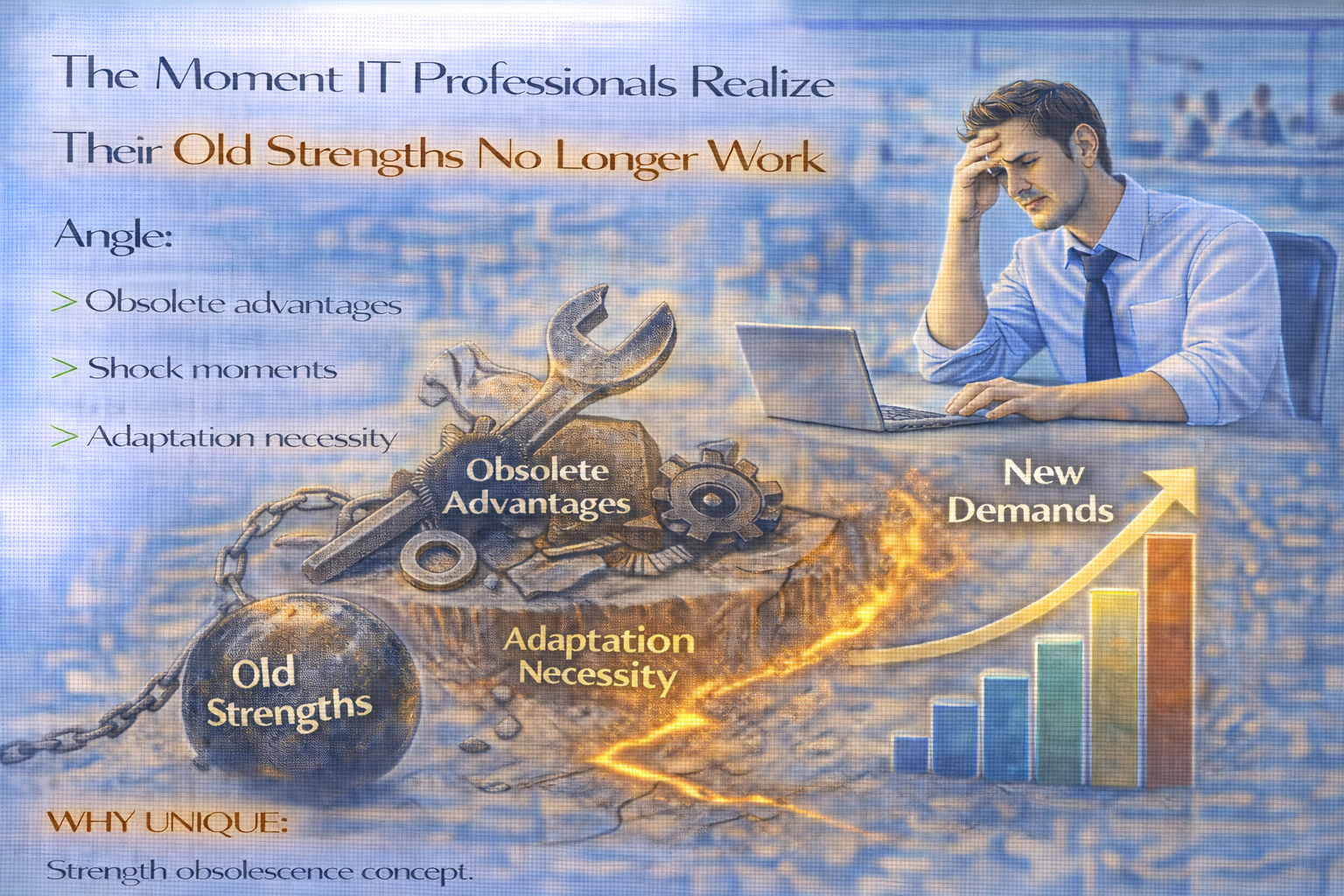
In the early stages of an IT career, power comes from execution.
You write code faster.
You fix harder bugs.
You deliver reliably.
Execution creates leverage.
But over time, something changes.
The professionals who continue to grow discover that execution power slowly gives way to judgment power.
What Execution Power Looks Like
Execution power is visible and measurable:
- Speed of delivery
- Volume of output
- Technical precision
- Hands-on problem solving
Early careers reward this heavily.
Organizations depend on people who can make things work.
The Limits of Execution Power
As systems grow larger and more complex, execution alone stops scaling.
No individual can:
- Know every detail
- Touch every component
- Personally solve every issue
At this stage, raw execution hits diminishing returns.
The Emergence of Judgment Power
Judgment power is different.
It comes from:
- Knowing which problems matter most
- Anticipating second-order consequences
- Making trade-offs under uncertainty
- Deciding what not to do
This power shapes outcomes without direct execution.
Experience as Leverage
Judgment is built from experience — but not just time.
It comes from:
- Seeing patterns repeat
- Understanding failure modes
- Learning what scales and what breaks
Two professionals may have equal experience.
The one with stronger judgment has greater leverage.
Decision Authority Replaces Task Ownership
As judgment power grows, roles change:
- From implementing decisions → influencing decisions
- From owning tasks → owning consequences
- From solving problems → defining them
This shift often feels like loss of control — but it is actually an increase in impact.
Why Many Professionals Resist This Shift
Execution feels safe.
Judgment feels exposed:
- Decisions are visible
- Mistakes have wider impact
- Accountability increases
Some professionals stay execution-heavy to avoid this pressure.
Over time, they plateau.
Developing Judgment Intentionally
Judgment does not appear automatically.
It develops when professionals:
- Reflect on outcomes, not just actions
- Study why decisions succeeded or failed
- Engage with context beyond their function
- Accept responsibility for ambiguity
Judgment grows when execution is no longer the main identity.
Final Thought
Execution builds careers.
Judgment sustains them.
Long-term IT careers are not defined by how much work you do —
But by the quality of decisions you influence when work becomes complex.