In the IT industry, opportunities are endless.
New tools, new frameworks, new certifications, new roles — every week something demands attention.
Without a personal decision filter, professionals react instead of choosing.
The most successful IT careers are not built on random decisions.
They are built on structured filtering.
1. Why You Need a Career Decision Filter
A decision filter acts like a personal operating system.
Instead of asking:
“Is this trend popular?”
You ask:
“Does this fit my long-term direction?”
Without a filter:
- You chase trends
- You switch paths frequently
- You dilute skill depth
- You lose strategic clarity
With a filter:
- You stay focused
- You build depth
- You move intentionally
2. Step 1: Define Your Core Direction
Before evaluating any opportunity, clarify:
- Do I want to be a deep technical expert?
- Do I want to move toward architecture or system design?
- Do I want to lead teams or stay hands-on?
When direction is unclear, every option looks attractive.
Clarity eliminates distraction.
3. Step 2: Identify Your Strength Stack
Your strength stack includes:
- Current technical skills
- Learning speed
- Problem-solving ability
- Communication skills
Choose opportunities that compound your existing strengths.
Career growth accelerates when skills build on each other — not when they compete.
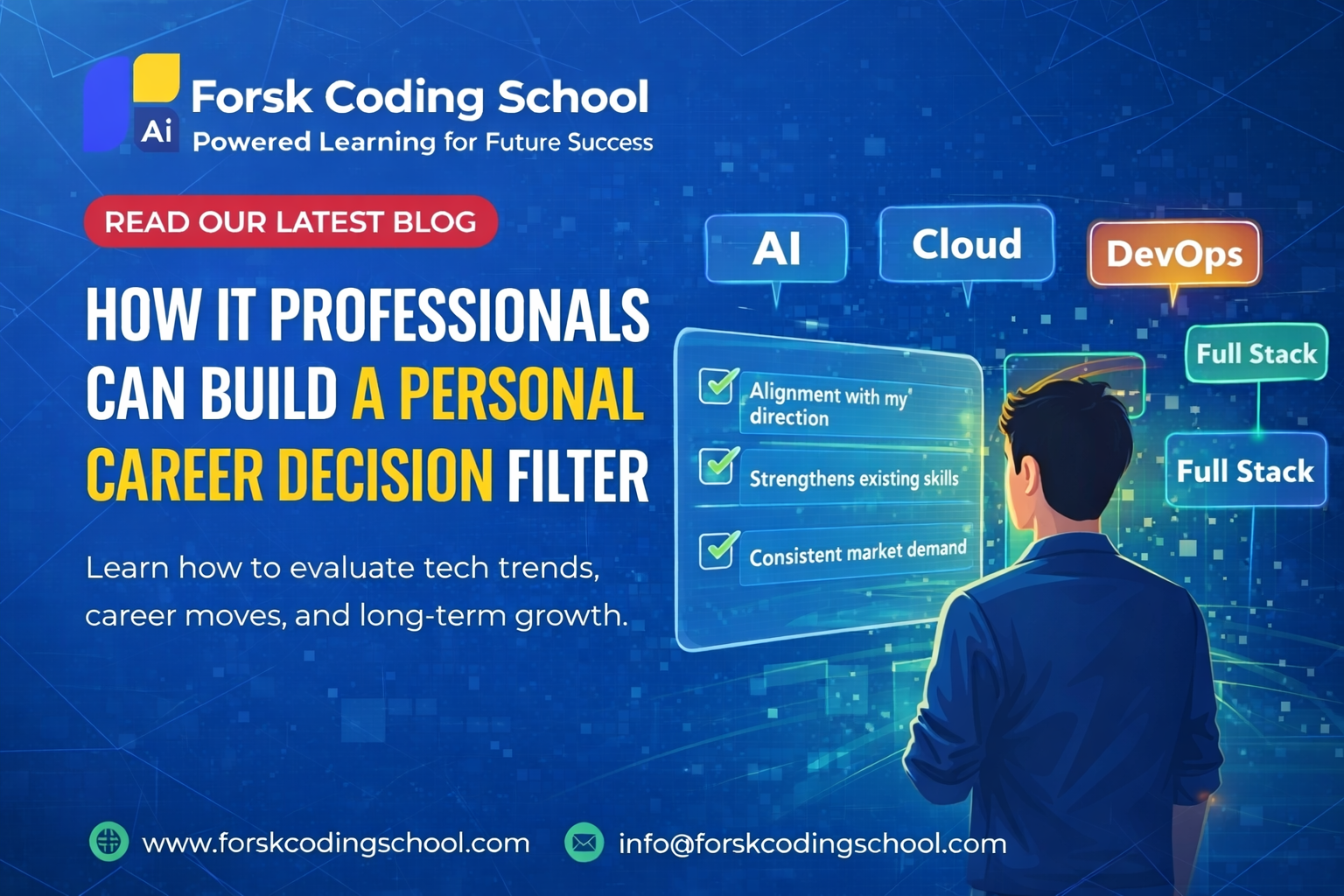
4. Step 3: Apply the 3-Filter Rule
Before making a move, evaluate:
- Alignment Filter – Does this align with my 3-year direction?
- Compounding Filter – Will this strengthen my existing stack?
- Market Filter – Is there consistent demand?
If a decision passes all three filters, it deserves attention.
If it fails two or more, ignore it.
5. Context Awareness Matters
Career advice must match your context.
What works for a 5-year experienced backend engineer may not work for a fresher.
Your stage, financial situation, skill maturity, and goals matter.
A personal filter respects context.
Conclusion
In modern IT careers, clarity is a competitive advantage.
The professionals who grow fastest are not those who learn everything.
They are the ones who filter wisely.
Build your career decision OS.
Choose with structure.
Commit with discipline.
Long-term success in IT is less about information — and more about intelligent filtering.