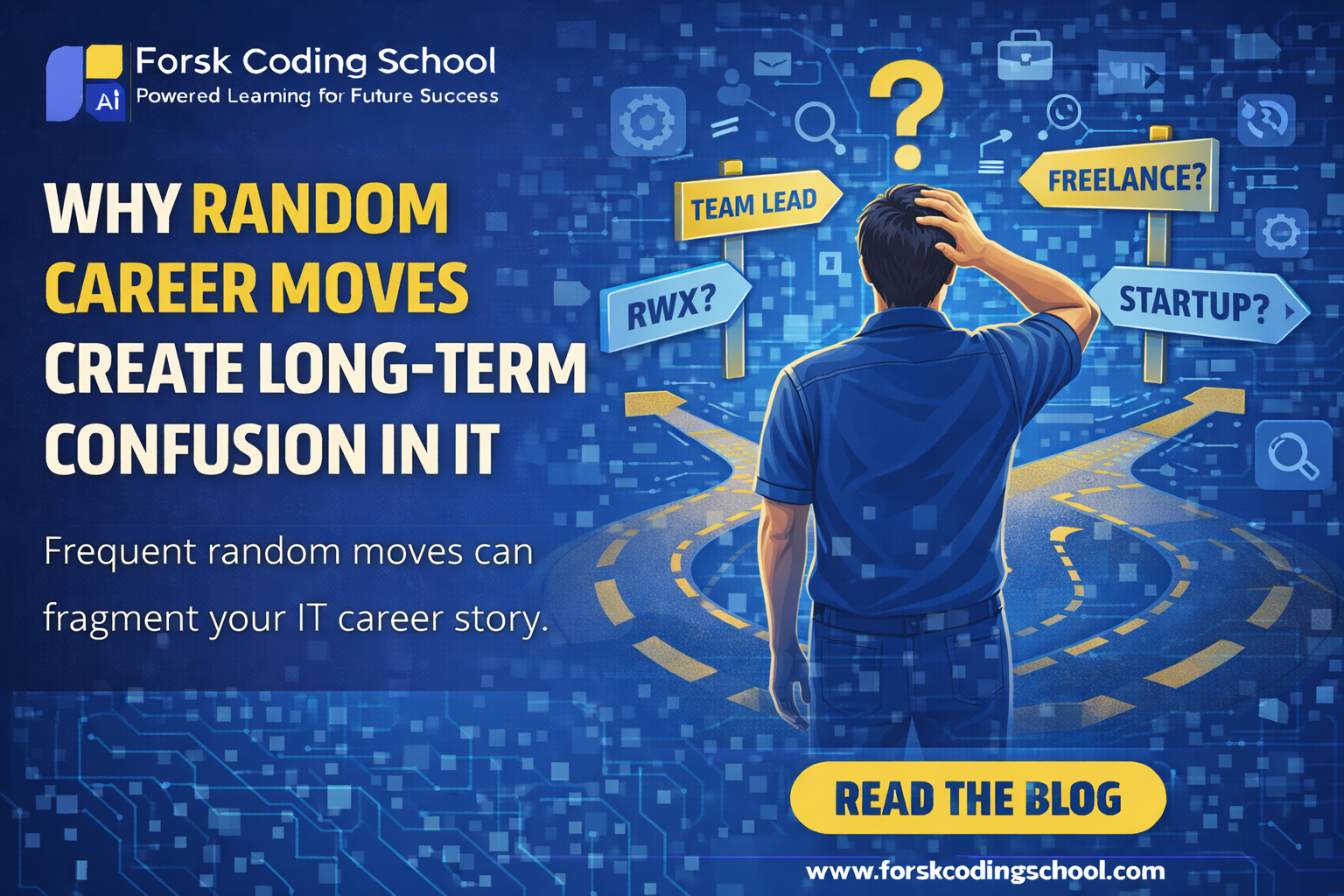
The IT industry offers enormous flexibility. Developers can switch domains, learn new stacks, and move across roles faster than in most professions. While this flexibility is powerful, it also creates a hidden risk.
Many professionals make random career moves early on — often chasing trends, salary jumps, or short-term opportunities — without realizing the long-term narrative cost.
Over time, these disconnected moves create professional confusion that slows growth, weakens positioning, and reduces recruiter confidence.
The Broken Story Arc Problem
Every career naturally tells a story. Recruiters and hiring managers look for progression patterns that signal direction and maturity.
When career moves appear random, the story arc breaks.
From the outside, the profile may start to look like:
- Backend → Testing → Support → Data Science → DevOps
- Multiple short roles with no clear theme
- Frequent domain switching without explanation
Individually, each move may have been reasonable. But collectively, the narrative becomes harder to interpret.
Why Random Moves Feel Smart in the Moment
Early in a career, switching directions often feels beneficial because it can bring:
- Quick salary increases
- Exposure to new technologies
- Short-term excitement
- Peer-driven FOMO relief
However, the market evaluates patterns over time — not isolated decisions.
The Recruiter Confidence Equation
When recruiters scan profiles, they unconsciously assess predictability and clarity.
They ask themselves:
- Can I clearly position this candidate?
- Does their experience show depth or drift?
- Will hiring managers understand this profile quickly?
- Does this person show long-term focus?
Random career signals reduce confidence, even when technical ability is solid.
Where Long-Term Confusion Appears
Professionals with scattered career paths often experience friction in:
- Senior role shortlisting
- Specialist role targeting
- Salary negotiations
- Leadership pipeline selection
- Personal brand clarity
Many feel “stuck” despite years of hard work.
Why IT Careers Are Especially Vulnerable
Narrative fragmentation is common in IT because:
- New technologies emerge rapidly
- Online learning encourages constant switching
- Early career guidance is often weak
- Market hype cycles create distraction
- Skill-based hiring masks narrative issues initially
Without intentional direction, randomness becomes the default.
Warning Signs Your Career Story Is Fragmenting
You may be facing narrative confusion if:
- Your professional introduction feels unclear
- Recruiters contact you for unrelated roles
- Your resume looks broad but unfocused
- Your learning roadmap changes frequently
- You struggle to define your core strength
Early awareness makes correction much easier.
How to Restore Narrative Coherence
The good news is that most careers can be realigned without starting over.
1. Identify Your Strongest Through-Line
Find the technical theme that appears most consistently.
2. Reframe Past Moves Intentionally
Explain transitions with clear logic and learning intent.
3. Narrow Future Choices
Prioritize roles that strengthen your core direction.
4. Highlight Depth Areas
Show measurable impact in your primary domain.
5. Communicate a Clear Professional Identity
Your positioning should be easy to summarize in one sentence.
Intentional Careers Compound Faster
In the long run, focused professionals often outperform equally skilled but scattered peers. Not because they work harder — but because their story builds trust and clarity.
Final Thoughts
In IT careers, flexibility is powerful — but randomness is expensive.
Professionals who make intentional, connected career moves build stronger market positioning, gain recruiter confidence faster, and progress more smoothly into senior roles.
At Jaipur Engineers and GrootLearning, we help students and professionals build structured career paths that compound instead of fragment.
Because in the tech industry, direction is leverage.