Most IT professionals regularly audit their code, systems, and performance metrics—but rarely audit their careers.
As a result, years pass quietly. Work continues. Skills accumulate. Yet direction slowly drifts.
A yearly career audit is a simple but powerful practice that helps you catch silent risks early, correct direction calmly, and stay aligned with long-term goals.
This is not about panic or comparison.
It is about intentional review.
Why Career Drift Is So Common in IT
IT careers are busy by default:
- Deadlines replace reflection
- Learning replaces direction
- Busyness hides misalignment
Without pause, professionals can move far—without moving right.
What a Career Audit Really Is
A career audit is not self-criticism.
It is a structured review of:
- Where you are
- Where you are heading
- What is silently accumulating risk
Just like technical audits prevent system failure, career audits prevent long-term dissatisfaction.
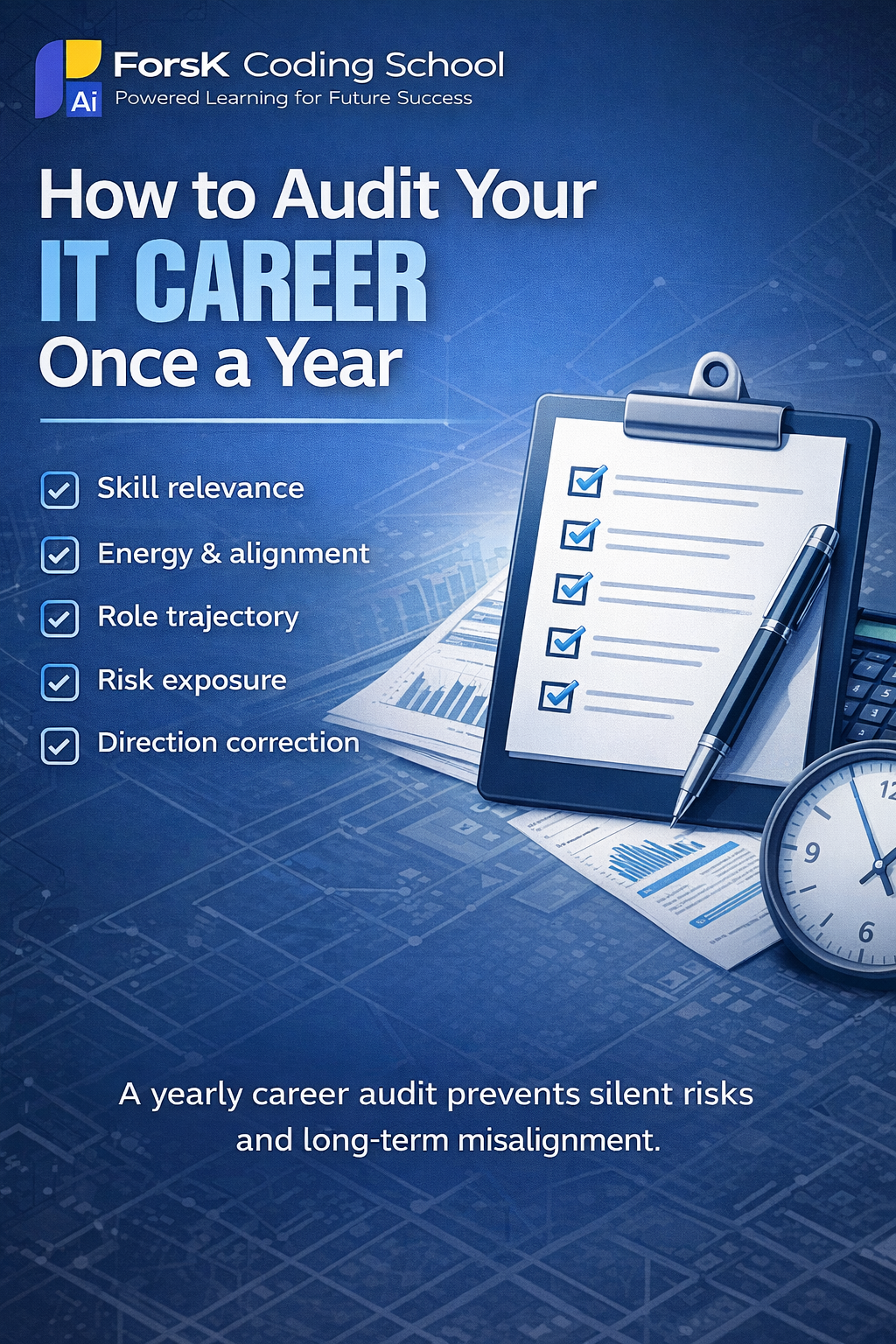
The 5-Part Annual IT Career Audit
1. Skill Relevance Check
Ask:
- Are my core skills still valuable?
- Am I building depth or just staying busy?
- What skills have compounded this year?
2. Energy Audit
Notice:
- What work energizes me?
- What drains me consistently?
- Am I tired because of effort—or misalignment?
Energy is a strong signal.
3. Role Trajectory Review
Evaluate:
- Is my role expanding in responsibility?
- Am I learning judgment, not just tools?
- Is this role preparing me for the next stage?
4. Risk Exposure Scan
Identify silent risks:
- Over-specialization
- Skill stagnation
- Health neglect
- Dependency on one company or domain
Catching risks early is easier than fixing them later.
5. Direction Correction
Decide:
- What to continue
- What to reduce
- What to deliberately add
Small corrections yearly prevent major resets later.
Why Once a Year Is Enough
Career direction does not change weekly.
Annual review is frequent enough to stay aligned—and slow enough to avoid overthinking.
Final Thoughts
A strong IT career is rarely accidental.
It is reviewed, adjusted, and protected.
If you audit your systems yearly, audit your career too.
That single habit can save years of regret.