In IT careers, depth is praised. Specialists are rewarded. Mastery is encouraged.
But there is a hidden risk few professionals acknowledge:
over‑reliance on a single skill.
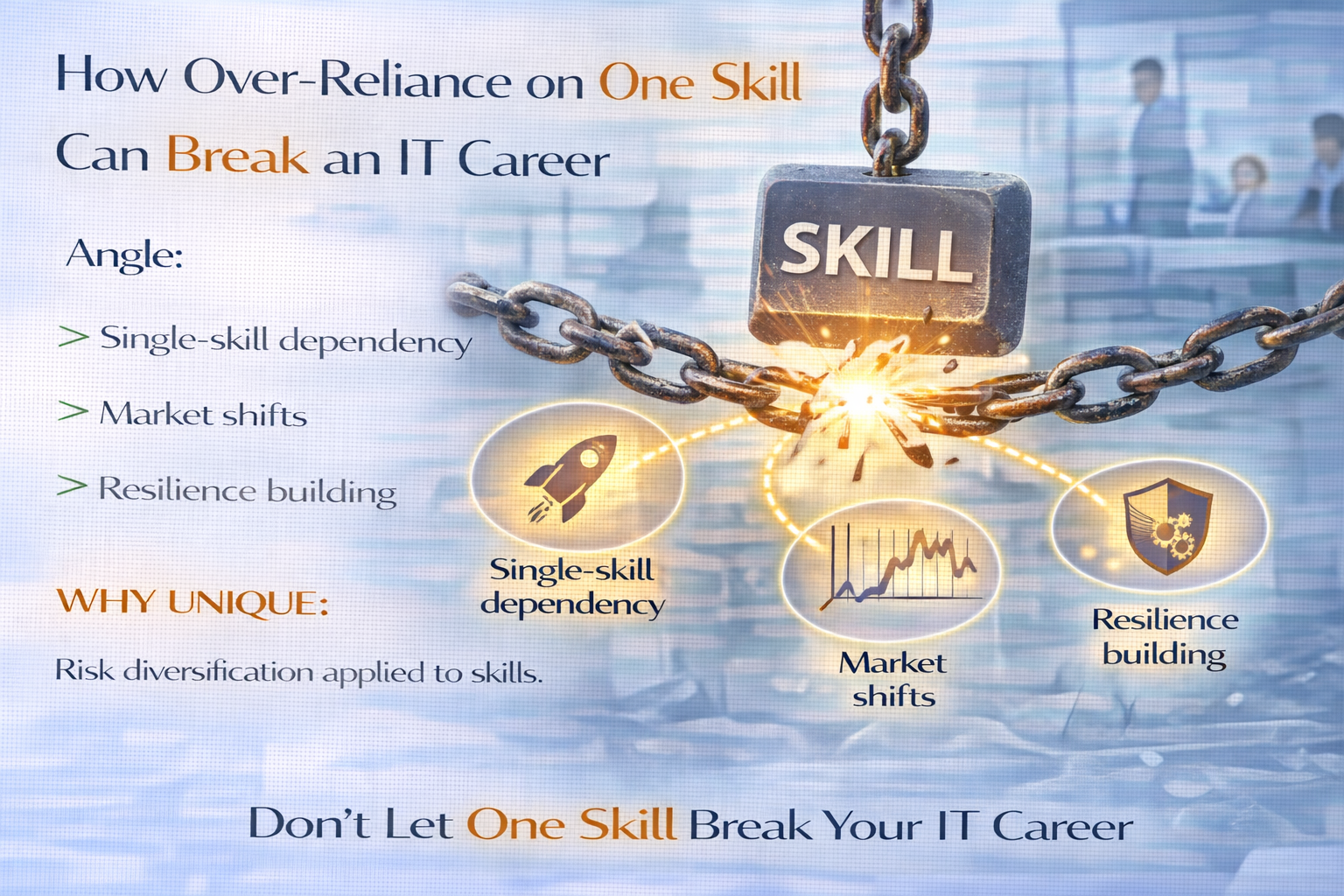
This article applies a risk‑diversification lens to IT careers and explains how single‑skill dependency quietly increases fragility—even for highly competent professionals.
Skill Success Can Create Hidden Risk
When one skill performs well, it becomes comfortable to rely on:
- A specific programming language
- One framework or platform
- A niche tool with strong demand
As long as the market rewards that skill, the career feels stable. But concentration creates exposure.
Just like financial portfolios, careers concentrated in one asset perform well—until conditions change.
Market Shifts Are Not Gradual
Technology markets don’t decline slowly. They pivot.
- Tools fall out of favor
- New abstractions replace old ones
- Hiring priorities shift rapidly
When demand moves, single‑skill professionals experience sudden value compression—not gradual adjustment.
The issue is not skill quality. It’s lack of alternatives.
The Illusion of Seniority
Over‑reliance often hides behind senior titles:
- “I’ve done this for 10 years”
- “This system runs the business”
- “Few people understand this”
These statements may be true—and still risky.
Seniority in a shrinking skill domain increases switching costs while reducing market flexibility.
Resilience Comes From Skill Liquidity
Resilient IT careers are built on skill liquidity:
- Ability to transfer thinking across tools
- Familiarity with adjacent technologies
- Comfort learning under pressure
Liquefied skills move where demand goes. Concentrated skills don’t.
Diversification Is Not Dilution
Many professionals avoid diversification fearing loss of depth.
But diversification doesn’t mean shallow learning. It means:
- One core skill
- Multiple adjacent capabilities
- Transferable fundamentals
This structure preserves expertise while reducing downside risk.
Early Signs of Dangerous Dependence
Warning signals include:
- Fear of new stacks
- Dismissing market shifts as “temporary”
- Resume relevance tied to one keyword
These are not confidence signals. They are fragility indicators.
Final Thoughts
Over‑reliance on one skill doesn’t fail careers immediately.
It makes them brittle.
IT professionals who diversify early don’t grow slower—they grow safer and stronger.
Depth creates value.
Diversification protects it.