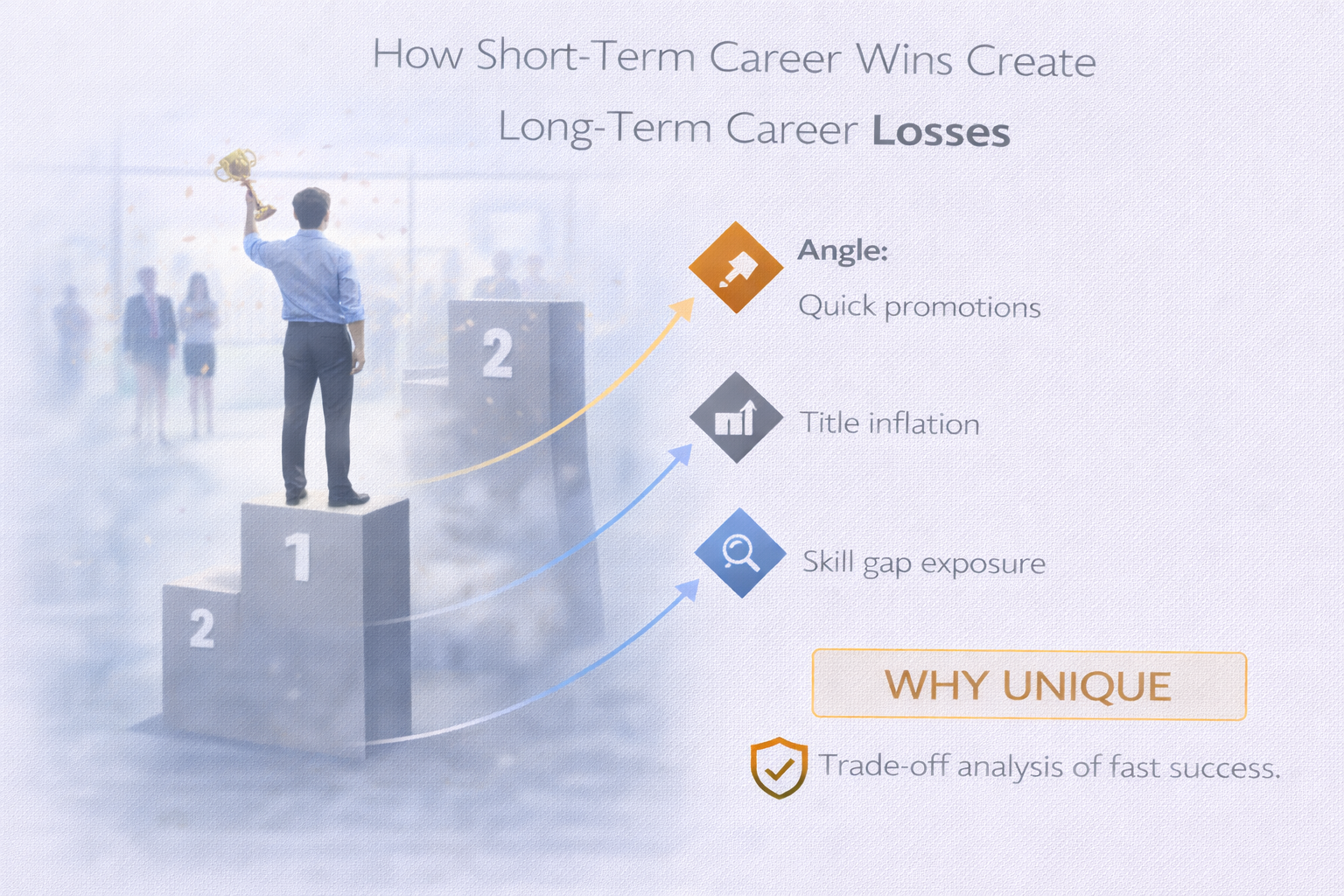
In IT careers, fast progress is celebrated. Quick promotions, impressive titles, and early recognition feel like proof of success. These wins are visible, validating, and often encouraged by organizations eager to reward performance.
However, short-term career wins can quietly create long-term career losses when growth outpaces capability.
This blog analyzes the trade-offs behind fast success — focusing on quick promotions, title inflation, and the hidden exposure of skill gaps over time.
Quick Promotions: When Speed Outruns Foundation
Rapid promotions often happen when:
- Teams grow quickly
- Talent shortages exist
- Early performers stand out
While this feels like momentum, speed can skip critical learning stages.
When professionals advance too fast:
- Decision-making experience lags responsibility
- Technical depth remains shallow
- Judgment is borrowed instead of earned
The role grows, but the foundation underneath it stays thin.
Title Inflation: Status Without Structural Support
Titles are symbols, not capabilities.
Title inflation occurs when:
- Job titles expand faster than scope
- Senior labels are applied to junior-level exposure
- Authority increases without ownership depth
Inflated titles raise expectations externally.
When professionals move roles or companies, the gap between title and actual capability becomes visible — often abruptly.
Skill Gap Exposure: When the Market Tests Reality
Skill gaps rarely show up immediately.
They surface during:
- System failures
- High-stakes decisions
- Cross-functional leadership moments
- Market downturns or job changes
Fast success delays exposure, but does not eliminate it.
When exposure finally occurs, recovery is harder because:
- Expectations are higher
- Mistakes are more visible
- Learning must happen under pressure
Why This Is Not Anti-Ambition Advice
Ambition is essential.
The risk lies in unchecked acceleration.
Healthy career growth balances:
- Advancement with learning depth
- Titles with transferable capability
- Speed with long-term resilience
Slower, layered growth often compounds better over decades.
Final Insight
Fast wins feel good.
Slow foundations last longer.
IT careers suffer when early success masks unbuilt capability and inflated titles create fragile trajectories.
Sustainable growth comes from aligning progress with preparedness — not racing ahead of it.