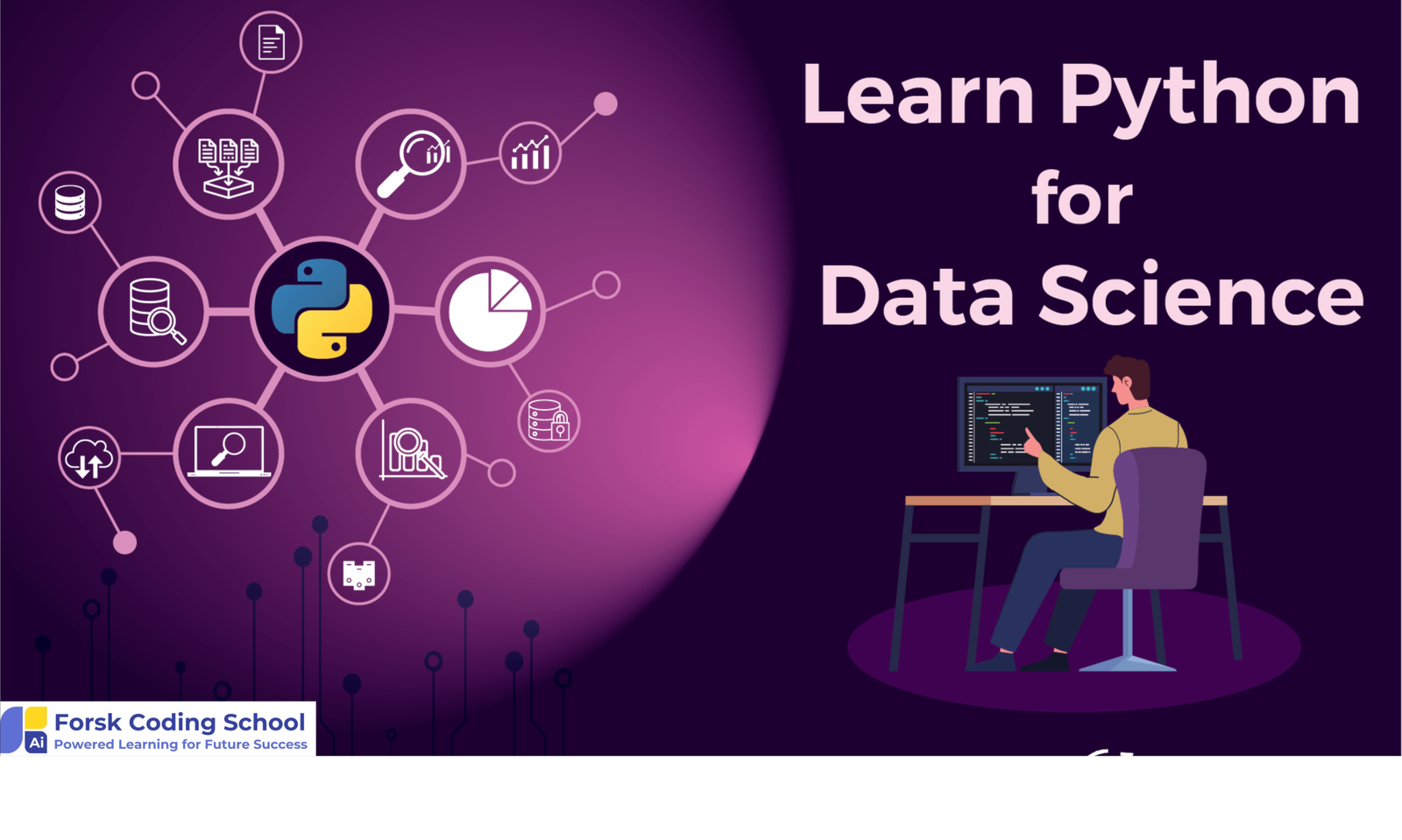
Python is the most important and widely used programming language in Data Science. If you want to build a successful career in data analytics, machine learning, or artificial intelligence, learning Python for Data Science is the first and most critical step.
Why Python Is Best for Data Science
Python is designed for simplicity, readability, and power, making it ideal for data-related work.
Key reasons why Python dominates Data Science:
- Easy to learn for beginners
- Powerful data science libraries
- Strong community support
- Used by startups and global companies
- Perfect for analytics, ML, and AI
Because of this, Python has become the default language for Data Scientists worldwide.
What Is Python Used for in Data Science?
Python is used at every stage of the Data Science lifecycle, including:
- Data collection
- Data cleaning & preprocessing
- Data analysis
- Data visualization
- Machine learning model building
- Automation & reporting
This makes Python a must-have skill for Data Science careers.
Step-by-Step Python Roadmap for Data Science
Step 1: Python Basics
Start with core Python concepts:
- Variables & data types
- Conditional statements
- Loops
- Functions
- Lists, tuples, dictionaries
These fundamentals help you think logically and write clean code.
Step 2: Python for Data Analysis
Once basics are clear, move to data handling.
Learn libraries like:
- NumPy – numerical operations
- Pandas – data analysis & manipulation
Skills you gain:
- Working with CSV & Excel files
- Handling missing values
- Filtering & transforming data
Step 3: Data Visualization Using Python
Visualization helps convert raw data into meaningful insights.
Learn:
- Matplotlib
- Seaborn
You’ll create:
- Bar charts
- Line charts
- Pie charts
- Heatmaps
This skill is essential for business decision-making roles.
Step 4: Python for Statistics
Statistics forms the backbone of Data Science.
Focus on:
- Mean, median, mode
- Probability
- Variance & standard deviation
- Correlation & regression
Python helps apply these concepts practically on real data.
Step 5: Machine Learning with Python
Python is the backbone of Machine Learning.
Learn:
- Supervised & unsupervised learning
- Linear & logistic regression
- Decision trees & random forest
- Model evaluation
Libraries used:
- Scikit-learn
This stage moves you from Data Analyst to Data Scientist.
Step 6: Real-World Python Projects
Projects prove your skills more than certificates.
Examples:
- Sales data analysis
- Customer churn prediction
- Student performance analysis
- Marketing campaign insights
Projects help you crack interviews and internships.
Who Should Learn Python for Data Science?
Python for Data Science is perfect for:
- Students (IT & non-IT backgrounds)
- Fresh graduates
- Working professionals
- Career switchers
- Engineers & analysts
No prior coding experience is required—structured learning is enough.
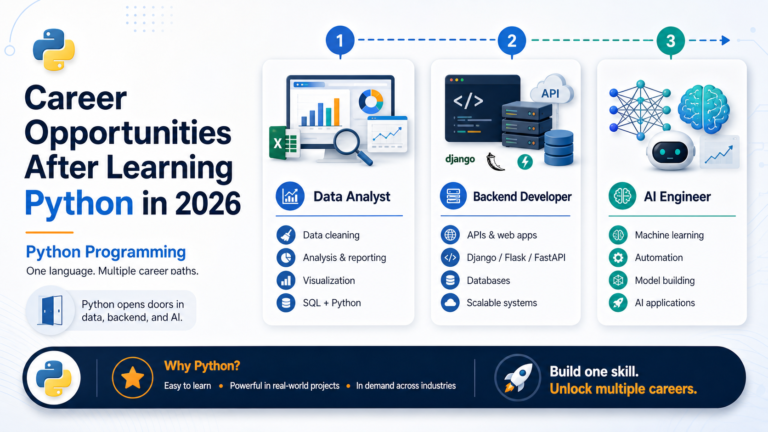
Career Opportunities After Learning Python for Data Science
With Python skills, you can apply for:
- Data Analyst
- Business Analyst
- Junior Data Scientist
- Machine Learning Engineer
- AI Analyst
Python opens doors to high-paying and future-proof careers.