Working in an IT service company is often the first real exposure many professionals get to the software industry. These companies hire in large numbers, offer structured entry points, and work with global clients. Yet, most conversations around service companies are either overly negative or unrealistically positive.
The truth lies somewhere in between.
This blog offers an honest, reality-based view of working in IT service companies—covering how service roles differ from product roles, the real learning opportunities available, and the career advantages and limitations professionals should understand early.
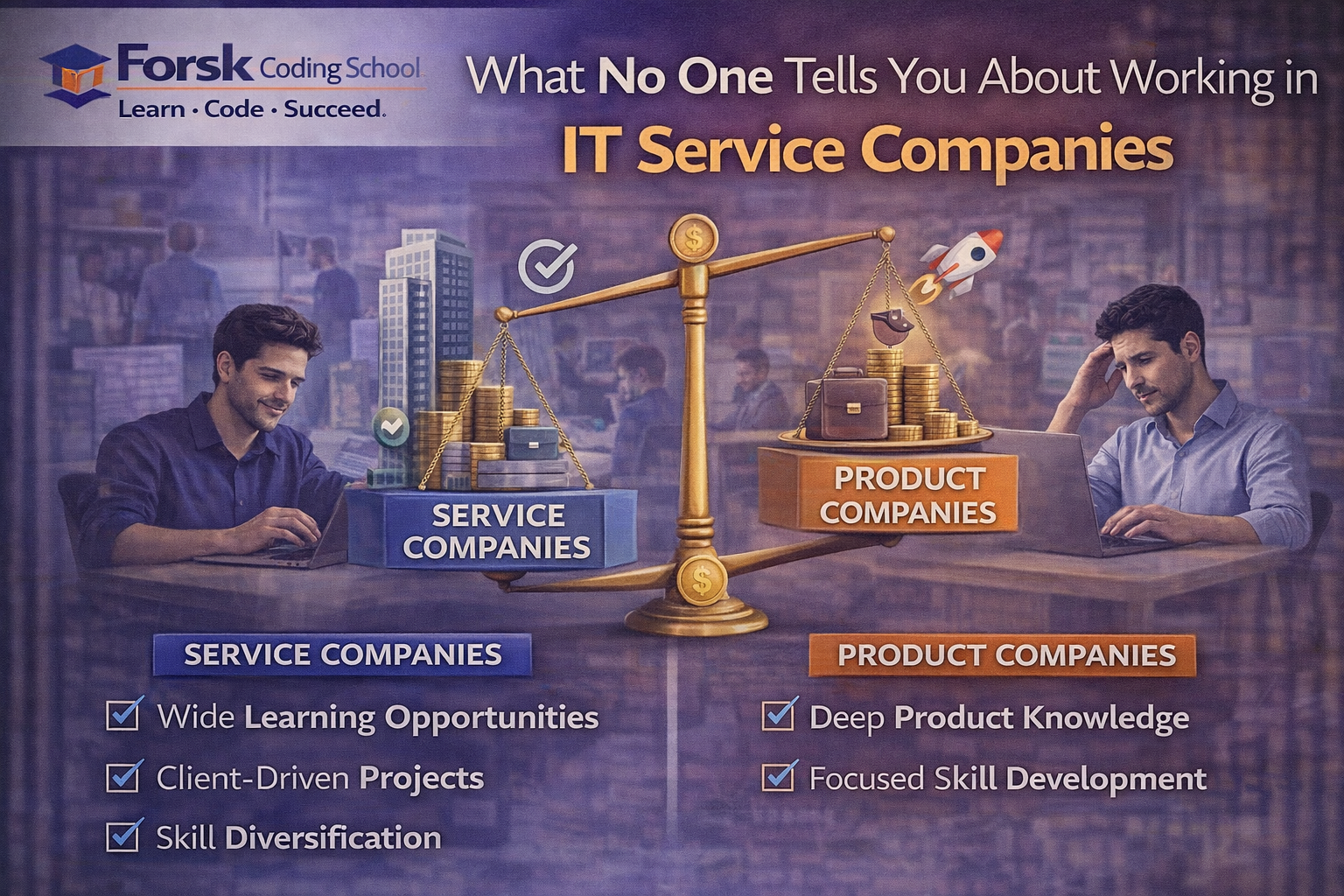
Service Companies vs Product Companies: The Core Difference
The biggest difference is what the company sells.
- Service companies sell time, expertise, and execution
- Product companies sell a product or platform
This difference shapes work culture, learning pace, and career paths more than most people realize.
The Reality of Work in IT Service Companies
You Work on Client Problems, Not Your Own Product
In service companies:
- Requirements come from clients
- Timelines are externally driven
- Success depends on client satisfaction
This teaches professionals how real businesses operate—but also adds pressure.
Context Switching Is Common
Many professionals work on:
- Multiple clients
- Changing requirements
- Different domains over time
This builds adaptability, but can slow deep specialization.
Learning Opportunities in Service Companies
Exposure to Real-World Projects
Service companies offer:
- Early client exposure
- Large-scale enterprise systems
- Interaction with global teams
Freshers often learn how IT actually works in the real world.
Learning Depends on Initiative
Unlike some product teams, learning is not always structured.
Growth depends on:
- Asking questions
- Volunteering for responsibility
- Learning beyond assigned tasks
Those who take initiative grow faster than those who wait.
Career Advantages of IT Service Companies
Working in service companies helps professionals:
- Build communication skills
- Understand business and clients
- Learn process discipline
- Develop adaptability
These skills transfer well across the industry.
Career Limitations to Be Aware Of
Risk of Shallow Technical Depth
If professionals:
- Do repetitive tasks for years
- Avoid ownership
- Don’t invest in fundamentals
They may struggle to build deep technical expertise.
Slower Individual Recognition
Large service organizations can make:
- Good work less visible
- Growth feel slower
Standing out requires proactive effort.
Why Service Companies Are Not “Bad”—But Not Automatic Growth Engines
Service companies are:
- Excellent learning grounds
- Strong career starters
But they are not magic.
Career growth depends more on how you use the environment than where you start.
How to Grow Strongly Inside a Service Company
- Focus on fundamentals
- Seek challenging projects
- Ask for feedback
- Learn client-side thinking
- Avoid staying on autopilot
Service companies reward those who take control of their learning.
Final Takeaway
What no one tells you about IT service companies is this:
They can either accelerate your career or quietly slow it down.
The difference is not the company—it’s awareness, initiative, and long-term thinking.
For many professionals, service companies are not a trap—they are a training ground.
In IT service companies, growth is possible—but never automatic.