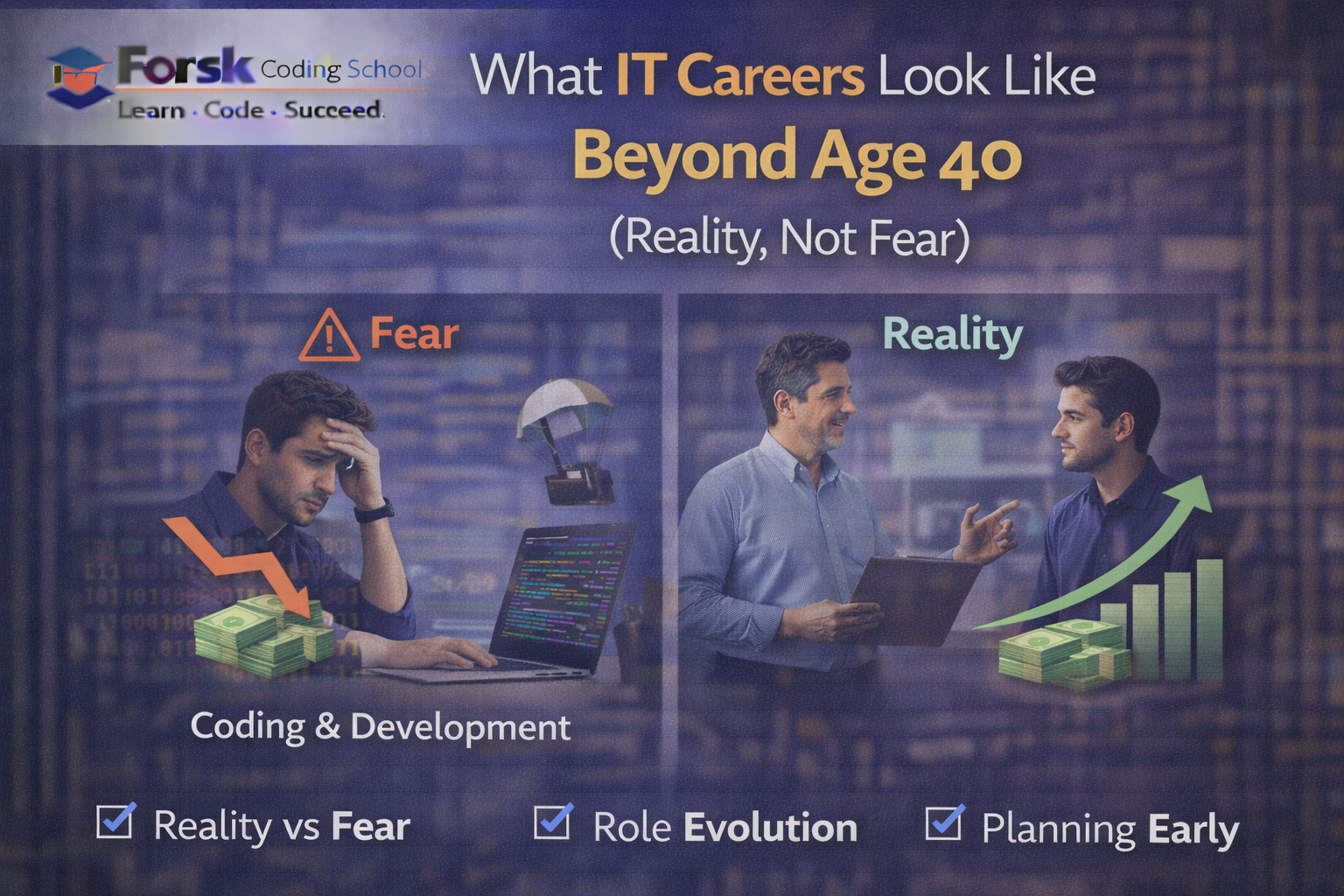
What IT Careers Look Like Beyond Age 40 (Reality, Not Fear)
In the IT industry, age is often discussed in whispers. Many professionals in their 30s quietly worry about what will happen after 40. Will opportunities disappear? Will skills become irrelevant? Will younger professionals replace them?
Much of this fear is exaggerated—or simply misunderstood. The reality of IT careers after 40 is more nuanced than popular narratives suggest. This blog separates fear from facts, explains how roles naturally evolve with age, and shows why early planning—not panic—is the real key to long-term stability.
The Fear Around Aging in IT
The fear usually comes from a few visible patterns:
- Fewer senior developers in hands-on roles
- Hiring bias toward “young and fast” talent
- Rapid technology changes
These observations are real—but the conclusions drawn from them are often wrong.
The Reality: IT Careers Don’t End After 40
IT careers don’t collapse after 40. They change shape.
Professionals who struggle are not those who age—but those who stay static.
Beyond 40, value shifts from speed to:
- Judgment
- Experience
- Decision-making
- Contextual understanding
These qualities grow with time, not youth.
Role Evolution After 40
From Execution to Direction
Many professionals gradually move away from pure execution roles into:
- Technical leadership
- Architecture
- Consulting
- Mentoring
This evolution is natural and healthy.
From Tools to Systems
Younger roles often focus on tools and frameworks. Senior roles focus on:
- System design
- Trade-offs
- Risk management
- Long-term impact
These areas reward experience.
Why Some IT Professionals Struggle After 40
The struggle usually comes from:
- Overdependence on one technology
- Avoiding responsibility and visibility
- Ignoring business understanding
- Not updating skills strategically
Age is not the cause—lack of evolution is.
Planning Early Changes Everything
The Best Time to Prepare Is Before 40
Professionals who plan early:
- Diversify skills
- Build domain knowledge
- Develop communication and leadership
- Create optional career paths
This planning makes age irrelevant.
What Employers Actually Value After 40
Organizations value professionals who:
- Reduce risk
- Mentor teams
- Make reliable decisions
- Understand business context
These are not junior traits—they are senior assets.
Redefining Success in Later IT Careers
Success after 40 is not about:
- Competing with freshers
- Learning every new framework
It is about:
- Staying relevant
- Creating impact
- Maintaining stability and dignity
The Real Threat Is Fear-Based Decisions
Fear causes professionals to:
- Make rushed career moves
- Chase trends blindly
- Undervalue experience
Clear thinking beats fear every time.
Final Takeaway
IT careers beyond 40 are not a dead end—they are a transition point.
Those who plan, adapt, and evolve continue to grow.
Those who panic or stay static struggle.
Age does not end IT careers.
Ignoring change does.
In IT, longevity belongs to those who evolve with intention, not fear.