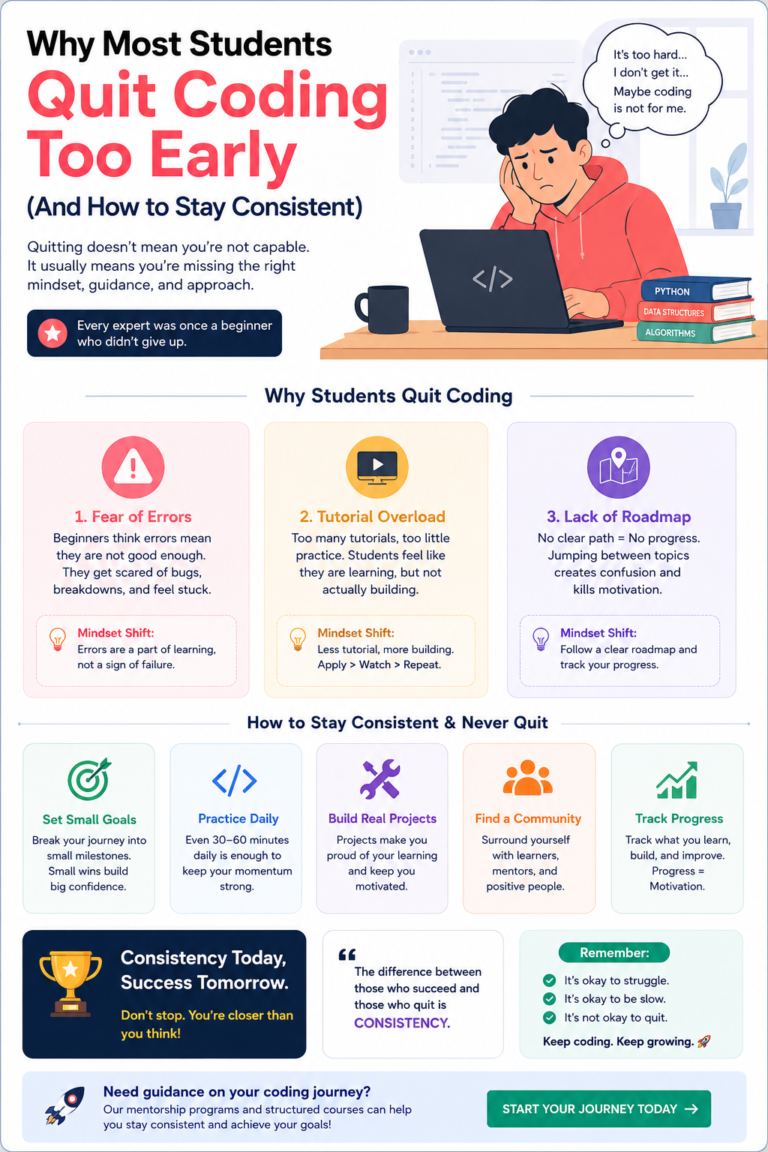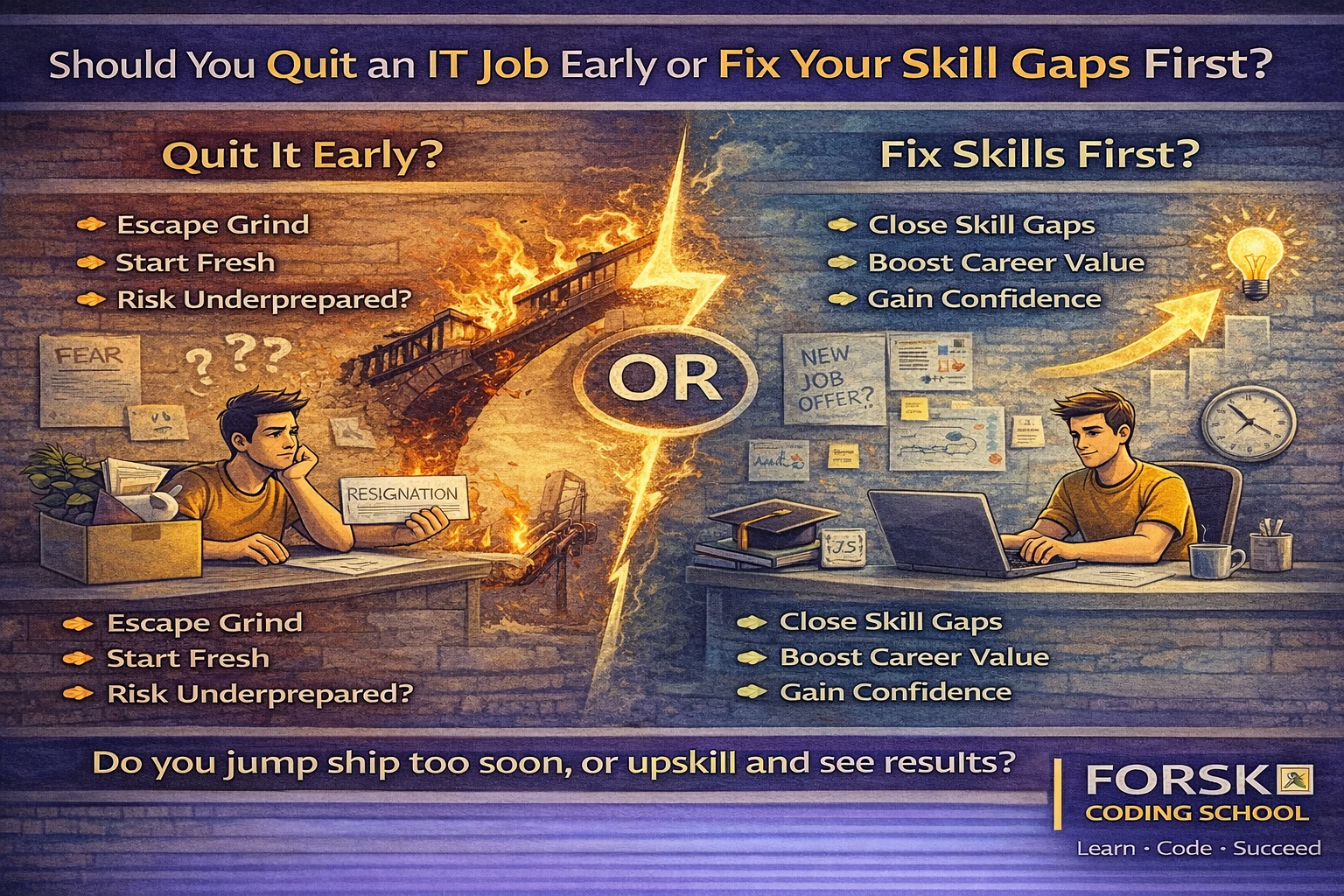
Many IT freshers and early professionals face a tough question within their first 6–18 months: Should I quit this job or fix my skill gaps and continue? Emotional decisions at this stage can slow career growth instead of accelerating it.
This blog breaks down when quitting makes sense, when it doesn’t, and how to take a smart, career-safe decision.
Why Freshers Think About Quitting Early
Common reasons include:
- Low salary or slow growth
- Work pressure or confusion
- Feeling under-skilled
- Comparison with peers
These feelings are normal—but decisions must be logical, not emotional.
The Hidden Risk of Early Job Hopping
Quitting too early can:
- Create a weak career story
- Limit learning depth
- Reduce recruiter trust
Frequent switches without growth raise red flags.
When You Should Fix Skill Gaps First
Stay and upskill if:
- You’re learning something valuable
- Seniors are supportive
- The role aligns with your long-term goal
Fixing gaps builds confidence and leverage.
When Quitting Is Actually the Right Choice
Consider quitting if:
- There is no learning at all
- Work culture is toxic
- Role has no future relevance
Even then, exit with preparation—not frustration.
Smart Exit Strategy for IT Professionals
Before quitting:
- Identify skill gaps
- Build projects
- Prepare interviews
- Secure an offer
Planned exits protect careers.
Final Thoughts
In IT careers, skills fix problems faster than job switches. Quit only when growth is impossible—not when learning feels uncomfortable.
Smart decisions today prevent regret tomorrow.