One of the most common questions students and parents ask is:
“How long will it take to get an IT job?”
The internet is full of unrealistic promises—30 days, 3 months, or instant placement guarantees. These claims create frustration, self-doubt, and wrong expectations. The truth is more practical and depends on how skills are built, not how fast a course is completed.
This blog gives an honest, realistic roadmap to understand how long it really takes to become job-ready in IT.
Why Unrealistic Timelines Create Frustration
Many students feel stressed because:
- They compare themselves with others
- They believe marketing promises blindly
- They expect results without enough practice
Unrealistic timelines don’t speed up success—they only increase pressure.
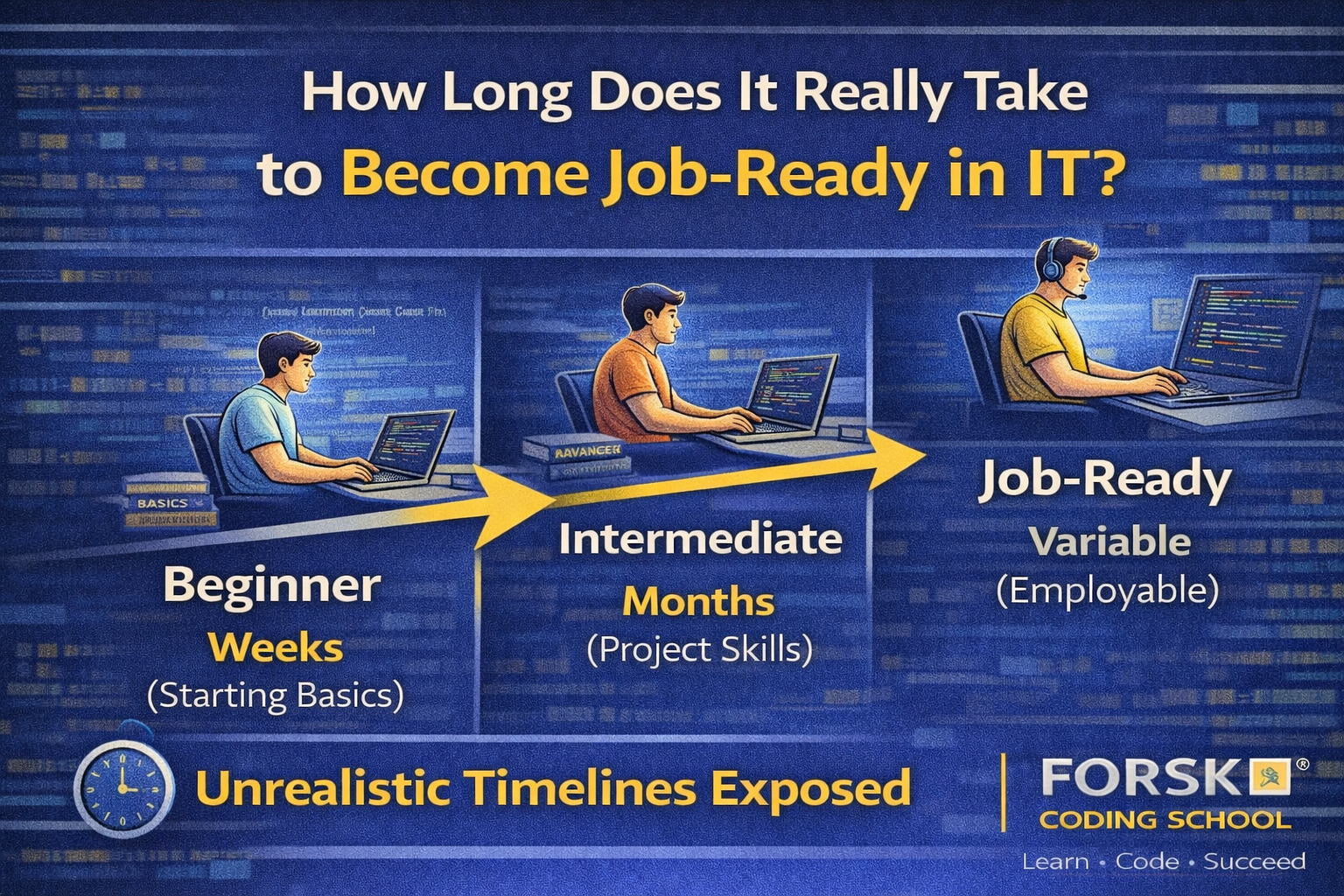
Stage 1: Beginner Stage (0–2 Months)
At this stage, students:
- Learn basic programming concepts
- Understand syntax and logic
- Get familiar with tools and environments
This phase builds foundation, not job readiness.
Stage 2: Skill-Building Stage (3–6 Months)
Here, students start:
- Writing structured code
- Solving small problems independently
- Understanding core concepts deeply
Confidence starts forming, but real-world readiness is still developing.
Stage 3: Project & Internship Stage (6–9 Months)
This is the most critical phase.
Students work on:
- Real projects
- Team-based tasks
- Internships or simulated work environments
This stage transforms learners into professionals.
Stage 4: Interview-Ready Stage (9–12 Months)
At this stage, students:
- Can explain projects confidently
- Understand interview questions
- Communicate clearly
This is when job applications start converting into offers.
What Actually Decides the Timeline
The time to become job-ready depends on:
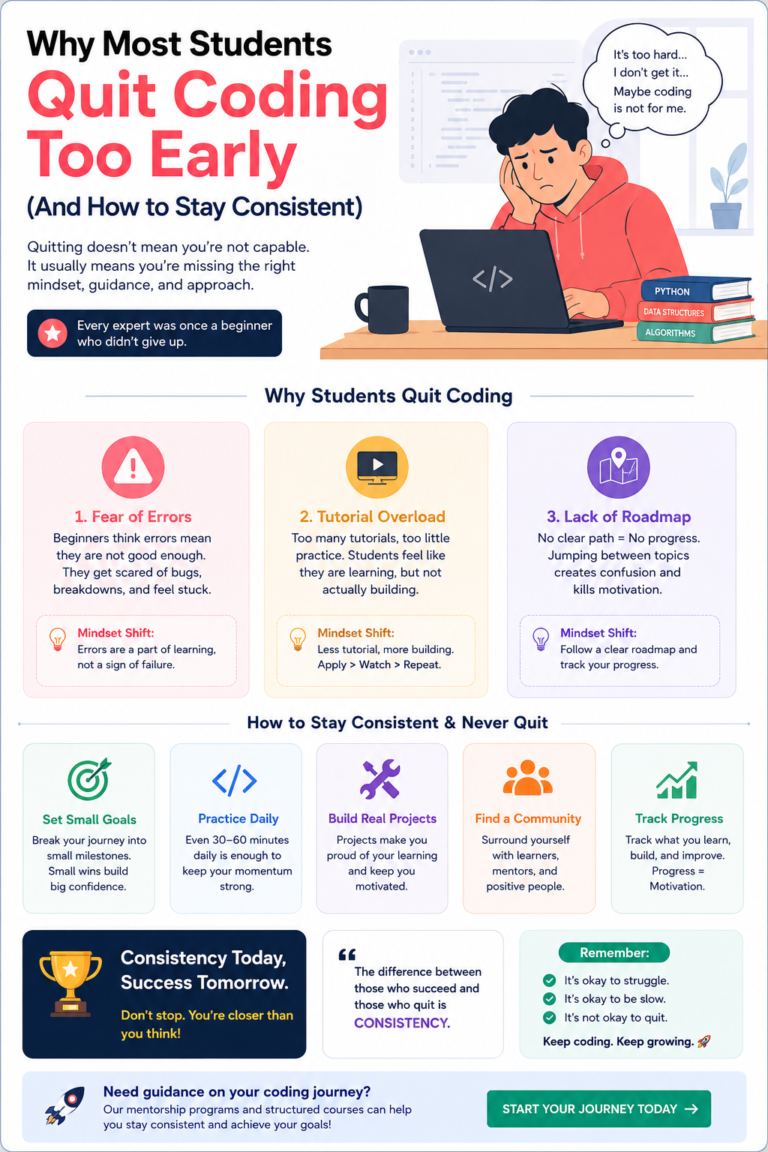
- Consistency of learning
- Quality of guidance
- Practical exposure
- Willingness to improve
There is no shortcut to competence.
Why Some Students Take Longer
Delays usually happen due to:
- Course hopping
- Lack of mentorship
- Fear of mistakes
- Avoiding projects
Awareness helps fix these issues early.
A Realistic Expectation
For most students, 9–12 months of focused effort is a healthy, realistic timeline to become job-ready in IT.
Some may take less, some more—but growth is never instant.
Final Thoughts
Becoming job-ready in IT is a journey, not a race. Honest timelines reduce frustration and build confidence.
Focus on skill depth, projects, and learning attitude. When readiness is real, opportunities follow naturally.