In the IT industry, thinking before acting is considered smart.
But overthinking?
That is expensive.
Many IT professionals delay career moves because they want certainty — the perfect course, the perfect technology, the perfect time.
Unfortunately, careers do not reward perfection.
They reward momentum.
1. Delay Has a Cost (Even If You Don’t See It)
When you postpone decisions like:
- Switching domains
- Applying for better roles
- Learning a new stack
- Starting project building
You assume you are being cautious.
But every delay carries hidden penalties:
- Lost learning time
- Missed hiring cycles
- Slower salary growth
- Reduced market relevance
In fast-moving IT markets, time compounds — either for you or against you.
2. Missed Windows of Opportunity
Technology trends move in waves.
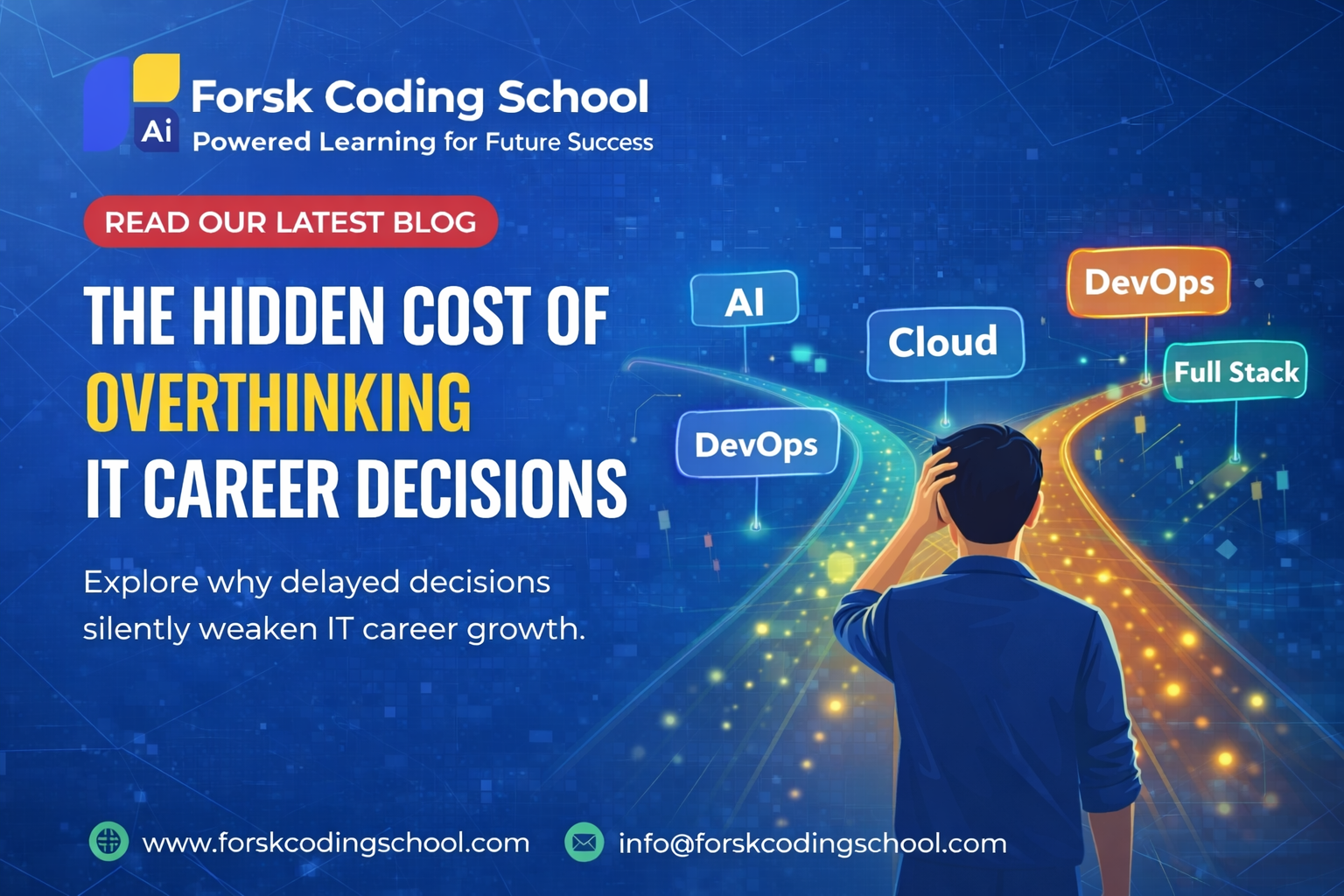
Cloud, AI, cybersecurity, DevOps — early movers often gain leverage because they act before certainty becomes obvious.
By the time something feels “safe,” competition increases.
Overthinkers often enter markets late.
And late entry reduces advantage.
3. Mental Drain Reduces Performance
Overthinking consumes cognitive energy.
When professionals constantly replay options like:
- “Should I switch?”
- “What if I fail?”
- “What if another field is better?”
They reduce focus on current performance.
Mental bandwidth spent on hypothetical futures weakens present execution.
And in IT careers, execution builds credibility.
4. Overthinking Feels Safe — But Isn’t
Many professionals believe:
“More analysis means less risk.”
In reality, excessive analysis increases risk because:
- Momentum disappears
- Confidence drops
- Opportunities expire
Imperfect action with direction is often safer than perfect planning without execution.
5. A Smarter Approach: Timed Decisions
Instead of endless thinking, try structured action:
- Set a decision deadline.
- Evaluate options using 3–4 key criteria.
- Choose.
- Commit for at least 6 months.
Career growth in IT requires cycles of action, feedback, and refinement — not permanent evaluation.
Conclusion
Overthinking feels intellectual.
But in competitive tech environments, it creates silent losses.
The professionals who grow fastest are not always the smartest.
They are the ones who act with clarity before certainty arrives.
In IT careers, timing plus action beats endless analysis.