In the IT industry, growth is often treated like a moral obligation. Faster learning, faster promotions, faster job switches—constant growth is celebrated as success.
But there is a darker side to this mindset.
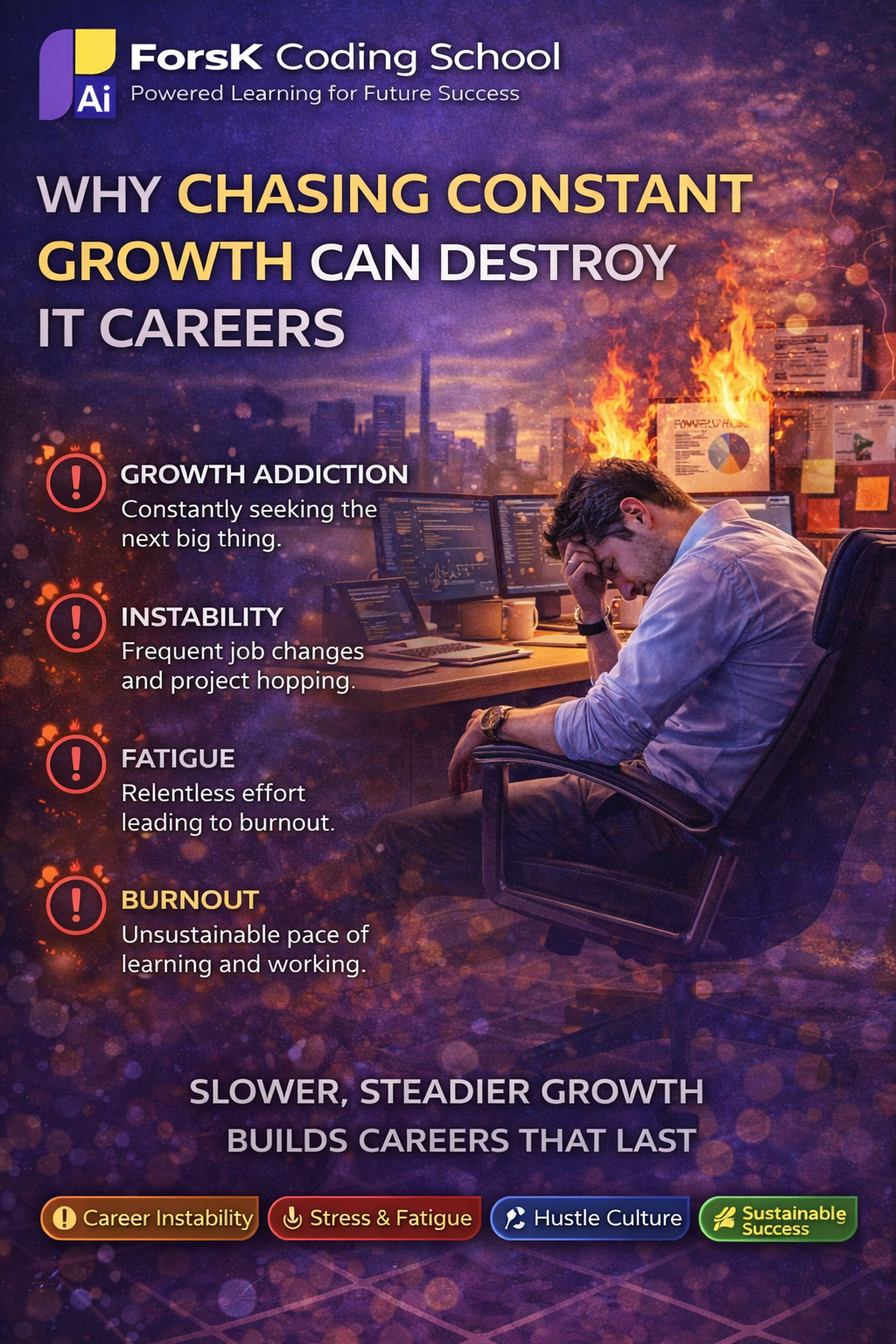
When growth becomes an addiction rather than a strategy, it quietly damages careers. Instead of building stability, professionals fall into cycles of instability, fatigue, and dissatisfaction.
This is where anti-hustle growth framing becomes essential.
The Rise of Growth Addiction
Growth addiction happens when:
- You feel anxious if you are not learning something new
- You constantly compare your progress with others
- You believe slowing down means falling behind
In this state, growth is no longer intentional. It becomes reactive.
Why Constant Growth Creates Instability
Chasing nonstop growth often leads to:
- Frequent job changes without depth
- Shallow understanding of many tools
- Weak professional identity
Instead of becoming reliable, you become replaceable.
Stability requires staying long enough to master skills—not just touch them.
Fatigue Is the Hidden Cost
Constant growth demands constant energy.
Over time, this results in:
- Mental exhaustion
- Loss of curiosity
- Reduced confidence
- Burnout
Fatigue makes even good opportunities feel heavy.
Hustle Culture vs Sustainable Growth
Hustle culture promotes urgency:
- Learn everything now
- Work harder than everyone else
- Never pause
Sustainable growth promotes rhythm:
- Learn deeply
- Apply consistently
- Recover intentionally
One burns fast.
The other lasts long.
Why Slower Growth Often Wins
Professionals who grow steadily:
- Build stronger fundamentals
- Develop better judgment
- Handle change calmly
- Maintain health and motivation
They may look slower in the short term.
They are stronger in the long term.
Reframing Growth in IT Careers
Better questions to ask:
- Is this growth sustainable for the next 5 years?
- Does this align with my long-term direction?
- Am I building depth or just collecting skills?
Growth should serve your career—not consume it.
Designing a Healthier Growth Strategy
- Focus on one major skill at a time
- Allow plateaus—they are part of mastery
- Schedule rest like learning
- Measure progress yearly, not weekly
Final Thoughts
Growth is important.
But unchecked growth obsession is destructive.
IT careers are not won by running nonstop. They are built by balancing ambition with stability, effort with recovery, and learning with depth.
Slow, intentional growth is not weakness.
It is professional wisdom.