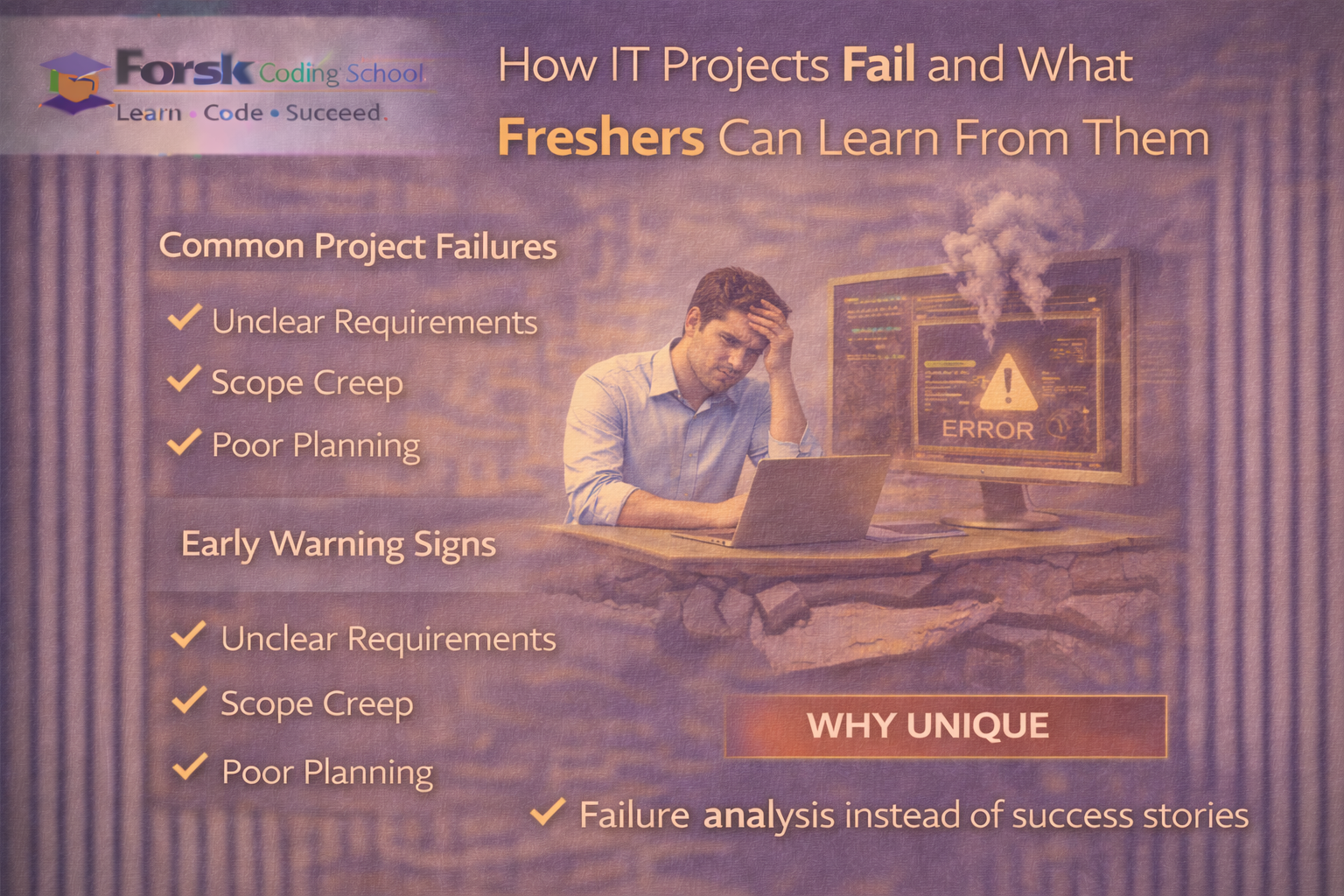
Most IT blogs talk about successful projects, best practices, and ideal workflows. In reality, IT careers are shaped more by failed projects than successful ones. Projects rarely fail suddenly—they collapse slowly through ignored signals, poor decisions, and system-level gaps. Freshers who understand these failure patterns early gain a powerful survival advantage.
This blog focuses on failure analysis, not inspiration stories.
Failure Starts Long Before Code Breaks
Most IT projects do not fail because of bad coding. They fail because of unclear goals, weak ownership, and unrealistic expectations. Code issues appear later, but the damage starts earlier.
Common early causes include:
- Vague or shifting requirements
- Overpromising timelines
- No clear definition of success
Freshers usually join after these decisions are made, which is why confusion feels normal.
Common IT Project Failure Patterns
1. Requirement Confusion
When business goals are not clearly translated into technical requirements, teams build the wrong thing efficiently. Rework increases, frustration grows, and deadlines slip.
2. Silent Technical Debt
Quick fixes are often celebrated early. Over time, these shortcuts slow development, increase bugs, and exhaust teams. Projects collapse under their own complexity.
3. Poor Communication Loops
Missed updates, unspoken risks, and delayed feedback create surprise failures. When problems are hidden, recovery becomes expensive.
4. Ownership Gaps
When everyone is responsible, no one is accountable. Decisions get delayed, quality drops, and blame replaces action.
Early Warning Signs Freshers Should Notice
Freshers often sense problems but lack language to describe them. Watch for:
- Constant scope changes without plan updates
- Frequent firefighting and emergency fixes
- No documentation or unclear responsibilities
- Testing treated as an afterthought
These are system-level red flags, not individual failures.
What Freshers Can Learn From Failed Projects
1. Learn the System, Not Just the Task
Understanding how requirements, design, testing, and delivery connect helps freshers avoid tunnel vision.
2. Ask Clarifying Questions Early
Many failures grow because basic questions were never asked. Thoughtful questions reduce rework.
3. Respect Process Even Under Pressure
Processes exist to prevent failure. Skipping them feels fast but creates long-term damage.
4. Document What You Learn
Documentation protects knowledge when teams change. It also builds trust.
Failure Is a Career Teacher
Experienced professionals value those who learn from broken projects. Failure sharpens judgment, improves risk awareness, and builds maturity faster than success.
Freshers who observe failures calmly—without panic or blame—develop long-term resilience.
Final Thought
IT projects fail because systems fail, not because individuals are weak. Freshers who understand failure patterns early stop personalizing chaos and start learning strategically. Knowing why projects fail is one of the fastest ways to grow in IT—without repeating the same mistakes.