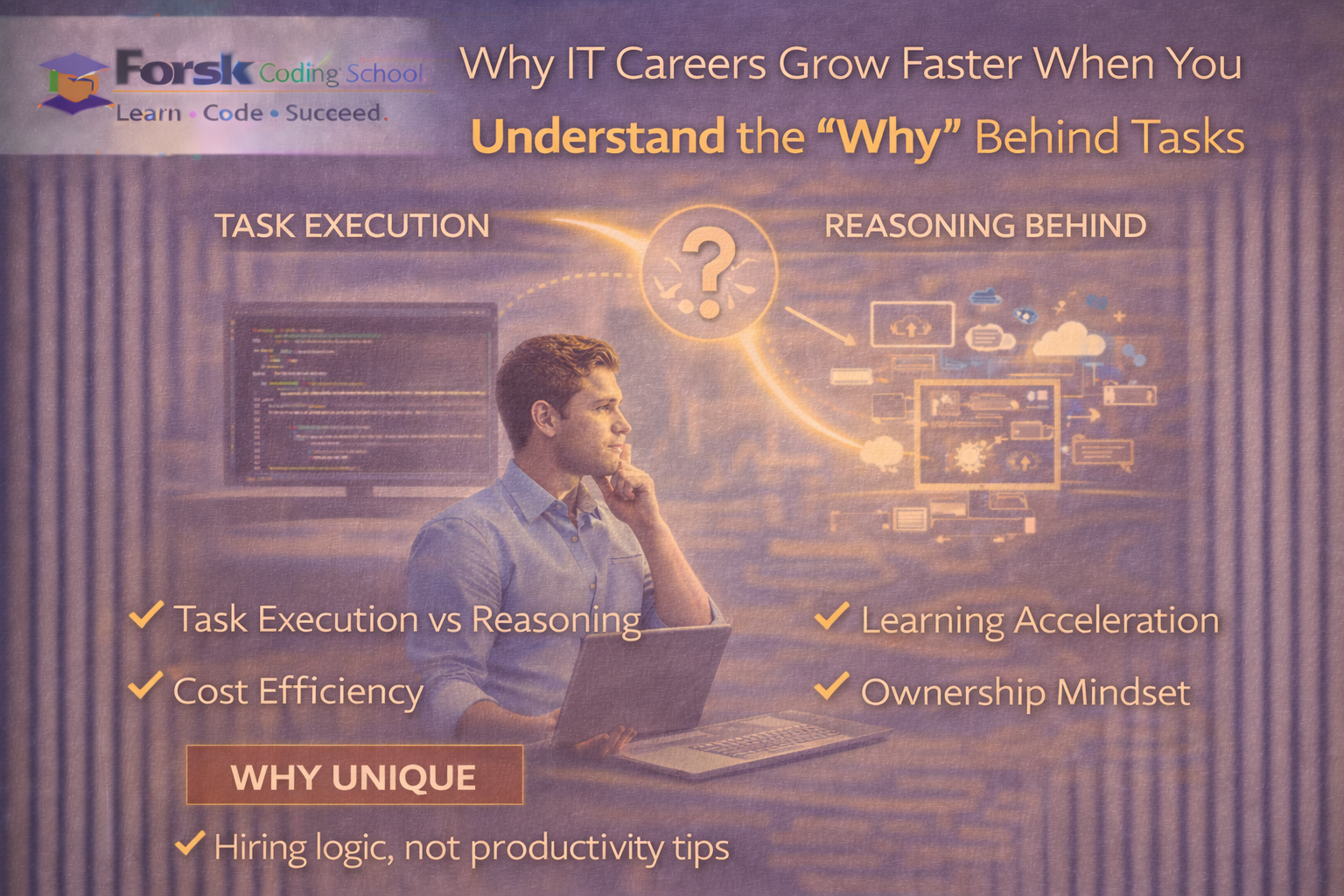
Many IT professionals focus on what needs to be done: implement this feature, fix that bug, follow these steps. While execution is essential, careers accelerate when professionals understand why a task exists in the first place. The difference between task execution and task reasoning is the difference between slow growth and compounding growth.
This is not a productivity hack. It is about cognitive depth—how deeply you understand the system you work in.
Task Execution vs Task Reasoning
Task execution answers: What do I need to do right now?
Task reasoning asks: Why does this task exist, and what problem is it solving?
Professionals who only execute tasks become reliable doers. Professionals who understand the reasoning behind tasks become problem solvers. Over time, organizations promote problem solvers faster.
Understanding the “Why” Accelerates Learning
When you know why a task exists, learning becomes faster and more transferable. Instead of memorizing steps, you learn principles.
For example:
- You don’t just add validation—you understand the risk it prevents
- You don’t just optimize queries—you understand performance trade-offs
- You don’t just follow architecture—you understand scalability intent
This kind of learning compounds across projects and technologies.
The Hidden Link Between “Why” and Ownership
Ownership begins when professionals understand consequences. Knowing why a task matters makes you naturally care about outcomes, not just completion.
Owner-minded professionals:
- Question unclear requirements
- Anticipate side effects
- Suggest better alternatives
This behavior signals readiness for responsibility—even without a title.
Why Task-Only Thinking Creates Career Plateaus
Professionals who never ask “why” often:
- Struggle when context changes
- Depend heavily on instructions
- Perform well only in familiar setups
As complexity increases, this limitation becomes visible. Careers stall not because of lack of effort, but because of shallow understanding.
How Managers Actually Evaluate This Skill
Leads and managers quietly value professionals who understand intent. They notice who can:
- Explain decisions clearly
- Adapt tasks to new constraints
- Reduce rework by asking the right questions early
These signals matter more than speed alone.
Building the Habit of Asking “Why”
This does not mean questioning everything publicly. It means:
- Understanding business goals behind tasks
- Learning system-level impact
- Reflecting after completion: What problem did this solve?
Small reflections create long-term clarity.
Final Thought
IT careers grow faster when professionals move beyond instructions and into intent. Understanding the “why” behind tasks deepens learning, builds ownership, and prepares you for senior roles. Execution gets you started. Reasoning takes you far.