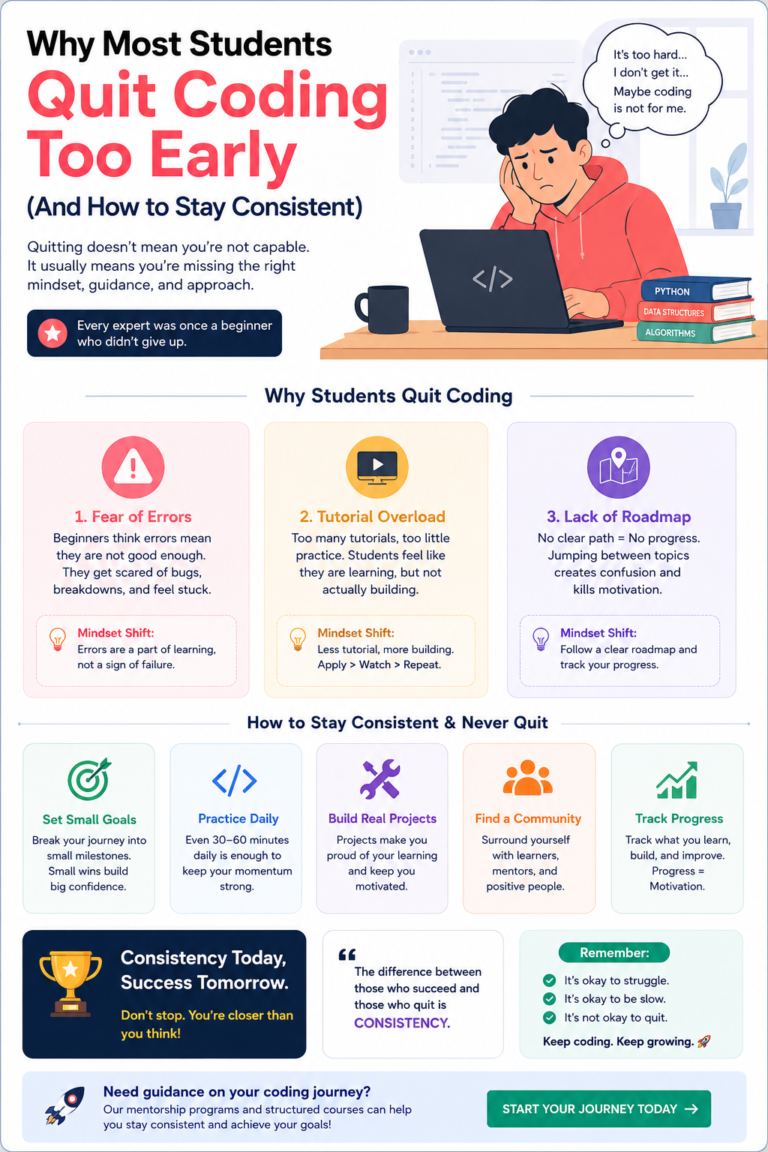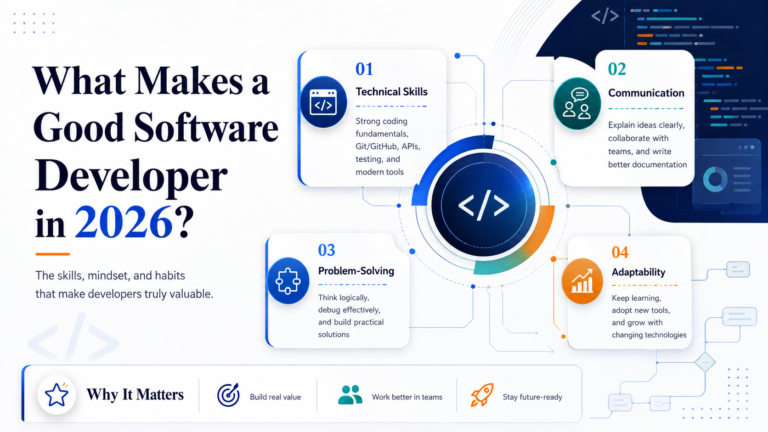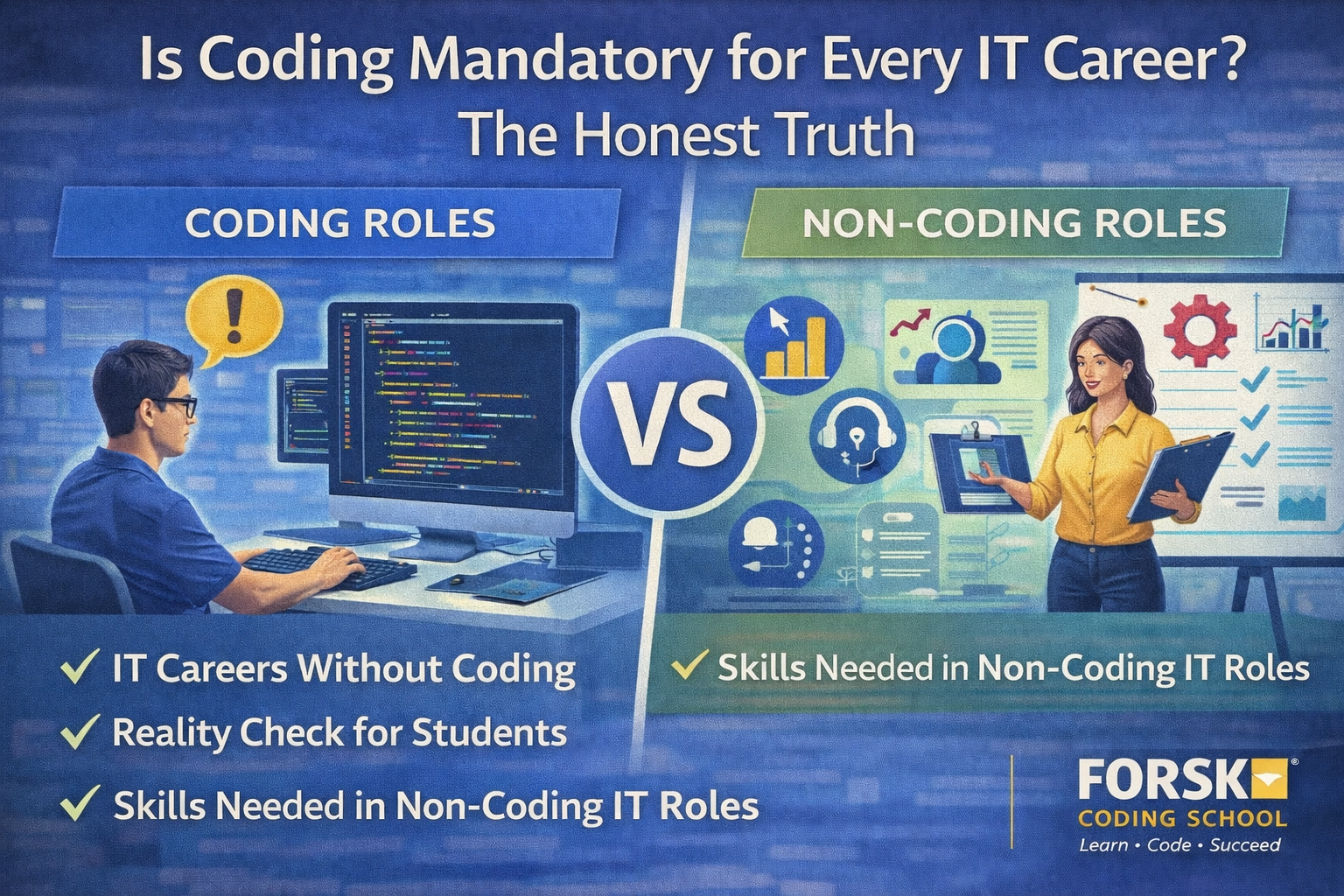
One of the biggest fears among students planning an IT career is coding. Many students believe that if they are not good at coding, IT is not for them. This belief pushes many capable students away from good IT careers unnecessarily.
So let’s answer this honestly and clearly:
Is coding mandatory for every IT career?
👉 The answer is NO — but understanding how technology works is mandatory.
This blog gives a reality check on coding vs non-coding IT roles and helps non-coders choose realistic IT career paths.
Why Coding Is So Important in IT
Coding is the foundation of software development. It teaches:
- Logical thinking
- Problem-solving skills
- How systems actually work
Because of this, coding-heavy roles dominate IT discussions. However, not all IT roles are developer roles.
IT Careers Where Coding Is Mandatory
Some IT careers cannot exist without coding. These roles involve building and maintaining software systems.
Coding‑mandatory roles include:
- Software Developer / Engineer
- Backend Developer
- Full Stack Developer
- Mobile App Developer
- AI / Machine Learning Engineer
If you choose these paths, strong coding skills are non‑negotiable.
IT Careers Without Heavy Coding (Reality Check)
There are several IT careers where coding is minimal or not required at all, but these roles still demand technical understanding.
Popular non‑coding or low‑coding IT jobs:
- Digital Marketing Specialist
- UI/UX Designer
- Manual Software Tester
- IT Support / Helpdesk
- Business Analyst
- Product Coordinator
These roles focus more on tools, processes, analysis, communication, and creativity rather than writing code daily.
Coding vs Non‑Coding Roles: Key Differences
| Aspect | Coding Roles | Non‑Coding Roles |
|---|---|---|
| Daily Work | Writing & debugging code | Tools, analysis, planning |
| Skills Needed | Logic, algorithms, syntax | Tools, communication, domain |
| Learning Curve | Steep | Moderate |
| Career Growth | Technical ladder | Functional / managerial |
Both paths are valid when chosen correctly.
Skills Needed for Non‑Coding IT Careers
Even non‑coding IT roles require serious skill development.
Important skills include:
- Strong tool knowledge (analytics, design, testing tools)
- Basic technical understanding
- Communication & documentation skills
- Problem analysis
- Business understanding
Non‑coding does not mean non‑technical.
The Biggest Myth: “Non‑Coding IT Jobs Are Easy”
Many students think avoiding coding means avoiding effort. This is false.
Non‑coding roles:
- Have performance pressure
- Require continuous upskilling
- Demand strong accountability
Every IT career requires discipline and learning.
How Non‑Coders Can Build a Strong IT Career
If you are not comfortable with coding:
- Choose roles aligned with your strengths
- Learn tools deeply
- Work on real projects
- Do internships for exposure
Guided learning makes the path much smoother.
Role of Career Guidance
The biggest mistake students make is choosing IT careers blindly.
Institutes like Forsk Coding School Jaipur help students:
- Understand coding vs non‑coding paths
- Choose realistic IT careers
- Build job‑ready skills
- Avoid career frustration
Final Thoughts
Coding is powerful, but it is not mandatory for every IT career. What matters most is choosing the right role based on your interest, skills, and long‑term goals.
Whether coding or non‑coding, IT rewards those who understand technology and keep learning consistently.