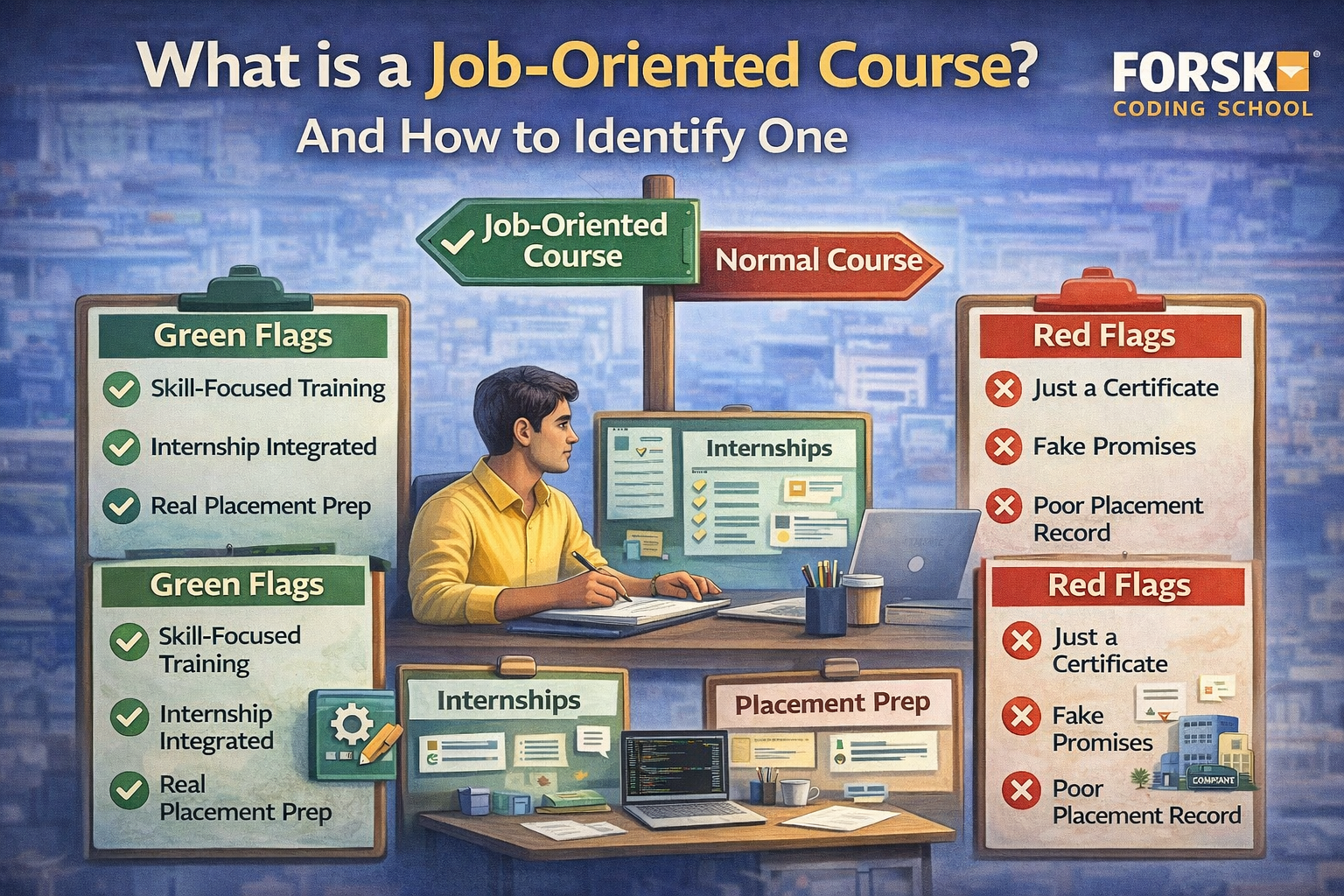
With thousands of courses available today, students often get confused between regular academic courses and job-oriented courses. Many institutes promise placements, but only a few actually prepare students for real IT jobs. Understanding what a job-oriented course really is can save students time, money, and career frustration.
If you are searching for job oriented courses in Jaipur or want clarity on IT job training, this blog explains the true meaning of job-oriented courses, red flags vs green flags, internship integration, and the real placement reality.
What Does Job-Oriented Course Actually Mean?
A job-oriented course is designed to prepare students for real industry roles, not just to teach theory.
Key purpose of a job-oriented course:
- Make students job-ready
- Teach industry-relevant skills
- Provide hands-on experience
- Align learning with company requirements
Unlike traditional courses, job-oriented programs focus on skills, projects, and employability.
Difference Between Academic Courses and Job-Oriented Courses
Academic Courses:
- Focus on syllabus and exams
- Limited practical exposure
- Minimal industry interaction
- Degree-oriented
Job-Oriented Courses:
- Focus on practical skills
- Live projects and tools
- Industry-oriented curriculum
- Placement-focused training
Understanding this difference helps students choose wisely.
Green Flags of a True Job-Oriented Course
Look for these positive indicators before enrolling:
✅ Practical Skill Training
Courses should focus on hands-on coding, tools, and real problem-solving.
✅ Live Projects
Students must work on real or industry-simulated projects.
✅ Internship Integration
Internships should be part of the curriculum, not optional add-ons.
✅ Industry Tools
Training should include tools used in real companies (Git, frameworks, databases).
✅ Interview Preparation
Mock interviews, resume building, and communication training should be included.
Red Flags That Show a Course is NOT Job-Oriented
Be careful if you notice these signs:
❌ Too many certificates, no projects
❌ Only recorded videos, no mentorship
❌ Guaranteed placement promises without clarity
❌ No internship or project exposure
❌ No alumni or placement track record
Such courses often fail to deliver real career outcomes.
Why Internship Integration Matters
Internships are the bridge between learning and employment.
Internships help students:
- Understand real work culture
- Apply skills in live environments
- Build confidence
- Strengthen resumes
Courses without internship exposure usually leave students unprepared for jobs.
Placement Reality: What Students Should Know
No course can guarantee a job, but a good job-oriented course maximizes your chances.
Placement depends on:
- Student effort
- Skill level
- Project quality
- Internship performance
- Interview readiness
Institutes that are honest about placements focus on preparation, not fake promises.
How to Identify the Right Job-Oriented Course (Step-by-Step)
Step 1: Check the Curriculum
Does it include tools, projects, and internships?
Step 2: Ask About Projects
Are they real-world or dummy projects?
Step 3: Verify Internship Support
Is internship mandatory or optional?
Step 4: Review Placement Support
Resume, mock interviews, referrals.
Step 5: Talk to Alumni
Past student outcomes reveal the truth.
Role of Job-Oriented Training Institutes
Good training institutes focus on industry alignment.
Institutes like Forsk Coding School Jaipur design programs that include:
- Job-focused IT training
- Live project exposure
- Internship integration
- Placement preparation
This approach prepares students for real IT careers, not just certificates.
Final Thoughts
A job-oriented course is not defined by flashy ads or guaranteed placement claims. It is defined by skills, projects, internships, and honest placement preparation.
If you are serious about building an IT career in 2026, choose job oriented courses in Jaipur that focus on real IT job training and practical experience.