Feature Engineering & Feature Selection
Feature Engineering & Feature Selection
Feature Engineering & Feature Selection is one of the most important topics in a Data Science & Data Analysis Course in Jaipur because the quality of features directly affects the accuracy, performance, and intelligence of Machine Learning and Artificial Intelligence models.
In Machine Learning, features are the input variables used by algorithms to make predictions. Well-designed features improve:
- Prediction accuracy
- Model performance
- AI intelligence
- Training efficiency
- Business insights
Feature Engineering & Feature Selection are widely used in:
- Data Science
- Machine Learning
- Artificial Intelligence
- Predictive Analytics
- Recommendation Systems
- Fraud Detection
- Healthcare Analytics
- Financial Forecasting
Understanding Feature Engineering & Feature Selection is essential for beginners because most successful Machine Learning projects depend more on high-quality features than complex algorithms.
Data Scientists spend a significant amount of time creating, cleaning, selecting, and optimizing features before training Machine Learning models.
What are Features in Machine Learning?
Features are input variables used by Machine Learning algorithms.
Example Dataset
| Hours Studied | Attendance | Marks |
|---|---|---|
| 2 | 80% | 40 |
| 5 | 90% | 75 |
Here:
- Hours Studied → Feature
- Attendance → Feature
- Marks → Target/Label
Features help Machine Learning models identify patterns.
What is Feature Engineering?
Feature Engineering is the process of:
- Creating new features
- Transforming existing features
- Improving data representation
Feature Engineering improves Machine Learning model performance significantly.
Why Feature Engineering is Important
Feature Engineering & Feature Selection help:
- Improve prediction accuracy
- Reduce model complexity
- Enhance AI intelligence
- Increase training efficiency
- Handle real-world datasets
Good features often outperform complex algorithms.
Real-World Applications of Feature Engineering & Feature Selection
Feature Engineering is used in:
- Fraud detection systems
- Recommendation engines
- Healthcare AI
- Stock market prediction
- Customer segmentation
- Search engines
- Chatbots
- Face recognition systems
Modern AI systems depend heavily on optimized features.
Types of Features in Machine Learning
| Feature Type | Description |
|---|---|
| Numerical Features | Numeric values |
| Categorical Features | Labels or categories |
| Date-Time Features | Time-based data |
| Text Features | Textual information |
Understanding feature types improves preprocessing quality.
Numerical Features
Numerical features contain numbers.
Examples
- Age
- Salary
- Temperature
- Marks
Numerical features are heavily used in predictive analytics.
Categorical Features
Categorical features contain labels.
Examples
- Gender
- City
- Product category
Machine Learning algorithms require categorical data conversion.
Encoding Categorical Features
Categorical data must be converted into numbers.
Label Encoding
Label Encoding assigns numerical values to categories.
Example
| Category | Encoded Value |
|---|---|
| Male | 1 |
| Female | 0 |
Python Example
from sklearn.preprocessing import LabelEncoder

encoder = LabelEncoder()

data = ["Male", "Female", "Male"]

encoded = encoder.fit_transform(data)

print(encoded)
Output Example
[1 0 1]One Hot Encoding
One Hot Encoding creates separate binary columns.
Example
| City | Jaipur | Delhi | Mumbai |
|---|---|---|---|
| Jaipur | 1 | 0 | 0 |
One Hot Encoding avoids ordinal relationships between categories.
Python Example of One Hot Encoding
import pandas as pd

df = pd.DataFrame({
    "City": ["Jaipur", "Delhi"]
})

encoded = pd.get_dummies(df)

print(encoded)
One Hot Encoding is widely used in Data Science preprocessing.
Feature Scaling in Machine Learning
Feature scaling standardizes feature ranges.
Scaling improves:
- Training speed
- Model performance
- Optimization quality
Why Feature Scaling is Important
Without scaling:
- Large-value features dominate
- Algorithms perform poorly
- Gradient descent becomes unstable
Feature scaling is essential for many Machine Learning algorithms.
Standardization in Machine Learning
Standardization transforms data into:
- Mean = 0
- Standard deviation = 1
Standardization Formula
Standardization is widely used in:
- Logistic Regression
- SVM
- Neural Networks
Normalization in Machine Learning
Normalization scales values between:
0 and 1Normalization Formula
X′=X−Xmin/Xmax−Xmin
Normalization is useful for Deep Learning and image processing.
Creating New Features
Feature Engineering creates meaningful new variables.
Example
From:
- Date of Birth
Create:
- Age
This improves predictive capabilities.
Date-Time Feature Engineering
Date-time data can generate:
- Day
- Month
- Year
- Weekday
- Quarter
Date-time features are heavily used in forecasting systems.
Text Feature Engineering
Text data can be converted into numerical features.
Common techniques:
- Bag of Words
- TF-IDF
- Word Embeddings
Text feature engineering powers:
- Chatbots
- NLP systems
- AI assistants
Feature Selection in Machine Learning
Feature Selection identifies the most important features.
It removes:
- Irrelevant features
- Redundant variables
- Noisy data
Feature Selection improves efficiency and accuracy.
Why Feature Selection is Important
Feature Selection helps:
- Reduce overfitting
- Improve model speed
- Simplify models
- Improve prediction quality
Smaller feature sets often produce better results.
Types of Feature Selection Methods
| Method | Purpose |
|---|---|
| Filter Methods | Statistical selection |
| Wrapper Methods | Model-based selection |
| Embedded Methods | Built-in selection |
Correlation-Based Feature Selection
Highly correlated features may create redundancy.
Correlation Formula Concept
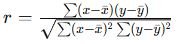
Correlation analysis helps identify important features.
Recursive Feature Elimination (RFE)
RFE removes less important features step by step.
RFE is widely used in:
- Machine Learning optimization
- Predictive analytics
- AI systems
Feature Importance in Random Forest
Random Forest algorithms automatically calculate feature importance.
Important features contribute more to predictions.
Feature importance improves explainability.
Dimensionality Reduction Using PCA
PCA reduces feature dimensions while preserving important information.
PCA improves:
- Speed
- Visualization
- Performance
PCA is heavily used in AI and Deep Learning.
Overfitting and Feature Selection
Too many irrelevant features increase overfitting risk.
Feature selection reduces:
- Noise
- Complexity
- Overfitting
Balanced feature selection improves generalization.
Feature Engineering Workflow
A standard workflow includes:
| Step | Description |
|---|---|
| Data Collection | Gather datasets |
| Data Cleaning | Prepare data |
| Feature Creation | Generate features |
| Encoding | Convert categorical data |
| Scaling | Normalize values |
| Feature Selection | Choose important features |
| Model Training | Train algorithm |
Understanding workflow improves project implementation.
Feature Engineering in Data Science
Feature Engineering & Feature Selection help Data Scientists:
- Improve predictions
- Optimize Machine Learning models
- Enhance AI systems
- Build intelligent analytics platforms
Feature engineering is one of the most critical stages in Data Science.
Feature Engineering in Artificial Intelligence
AI systems use feature engineering for:
- NLP systems
- Recommendation engines
- Computer Vision
- Predictive analytics
Well-designed features improve AI intelligence significantly.
Advantages of Feature Engineering & Feature Selection
Feature Engineering provides:
- Better prediction accuracy
- Faster model training
- Improved AI performance
- Reduced overfitting
- Better business insights
Optimized features improve Machine Learning efficiency dramatically.
Best Practices While Learning Feature Engineering & Feature Selection
Students should:
- Understand datasets carefully
- Practice feature scaling
- Create meaningful features
- Remove irrelevant variables
- Use real-world datasets
Practical implementation improves Machine Learning expertise.
Industry Importance of Feature Engineering & Feature Selection
Companies hiring Data Science and Machine Learning professionals expect:
- Data preprocessing expertise
- Feature engineering skills
- Model optimization knowledge
- AI analytical thinking
Feature Engineering is one of the most important skills in Data Science interviews and projects.
Practical Activity
Activity 1
Perform:
- Label Encoding
- One Hot Encoding
Activity 2
Apply:
- Standardization
- Normalization
on sample datasets.
Activity 3
Create new features from:
- Date-time data
- Numerical variables
Activity 4
Use feature selection techniques on Machine Learning datasets.
Summary
In this lesson, students learned:
- Feature Engineering & Feature Selection
- Feature scaling
- Label Encoding
- One Hot Encoding
- Standardization and normalization
- Correlation analysis
- PCA dimensionality reduction
- Feature importance
This lesson forms the foundation for advanced Machine Learning optimization, Artificial Intelligence systems, and predictive analytics.
Frequently Asked Questions (FAQs)
What is Feature Engineering in Machine Learning?
Feature Engineering creates and transforms variables to improve Machine Learning performance.
Why is Feature Selection important?
Feature Selection removes irrelevant features and improves model accuracy.
What is One Hot Encoding?
One Hot Encoding converts categorical values into binary columns.
Why is feature scaling important?
Feature scaling improves Machine Learning training speed and performance.
What is the difference between standardization and normalization?
Standardization centers data around mean 0, while normalization scales data between 0 and 1.
What is PCA in Machine Learning?
PCA reduces feature dimensions while preserving important information.
Is Feature Engineering important in AI systems?
Yes, Feature Engineering significantly improves AI model intelligence and accuracy.